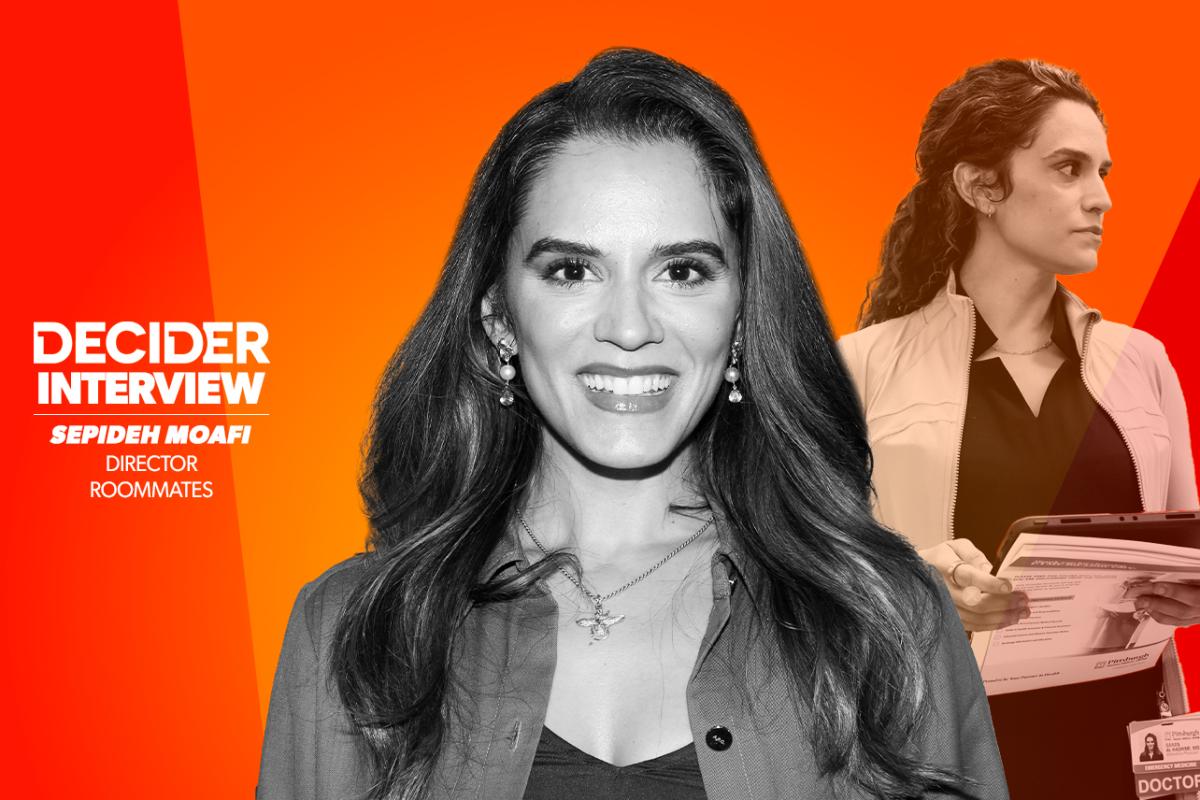
The Pitt Season 2 introduced us to the beguiling Dr. Baran Al-Hashimi (Sepideh Moafi), a new attending transferring over from the VA to sub in for Dr. Robby (Noah Wyle) while he left work to go on a three-month-long sabbatical. However, after last night’s dramatic Season 2 finale, it’s possible that Dr. Al won’t be replacing Dr. Robby on the HBO Max show at all.
**Spoilers for The Pitt Season 2 finale, now streaming on HBO Max**
Last week’s episode of The Pitt ended with the revelation that Dr. Al-Hashimi has secretly been managing a seizure disorder. The two moments where she was caught staring out into space were, in fact, seizures. The first seizures she’s had in over a year.
Although Dr. Al has done everything possible to temper her condition, Dr. Robby ultimately confronts her about it. What follows is an explosive scene where the two talented doctors ferociously argue their points. Robby’s ultimatum is that Al-Hashimi better self-report and get treatment or he’ll essentially snitch on her, which could destroy her entire career.
“Getting to unleash in that moment felt kind of cathartic because it’s existential for her,” The Pitt star Sepideh Moafi told DECIDER last week. “It’s not just her health, it’s her life. It’s everything she’s worked her entire life to get this position as a doctor.”
“All the work that she’s done and everything she’s worked in her life to disprove that I am not lesser than. I’m not incompetent. I am just as good as anyone else.”
We already know that Supriya Ganesh‘s Dr. Mohan won’t be returning to The Pitt Season 3, but Dr. Al-Hashimi’s future on the HBO Max hit is still up in the air. The last we see of Baran, she’s sobbing in her car, finally accepting that she should not be driving in her condition. DECIDER chatted with Moafi about the part of this scene that was cut from the final edit and what comes next for Dr. Al…
DECIDER: I know that when I spoke to you in December, I asked you about the pause at the end of episode one, and you were like, “It’s a big spoiler.” Last night it finally came out that your character has a history of seizures. What is it like for that secret to finally be out there?
SEPIDEH MOAFI: It’s a huge relief. Because I get to talk about it now, and it’s something that’s such a formative, such a foundational part of this character. And so being able to speak about it openly and, you know, work your way backwards and talk more about these moments that that raise question marks or even certain character traits that people have wondered about, like her being so kind of reserved. Things just make a lot more sense now. So it’s a relief to be able to talk about it.
Also I love that in the beginning there were people who were quick to judge and quick to say they knew this woman. And I love shattering people’s perceptions and expectations of characters, because it makes us realize that as human beings, we’re all hiding something. We’re all managing something and struggling through something. Ultimately, I think that the greatest gift of being an actor is being able to make people feel and make people try to understand each other more as human beings and not be so quick to judge. So I I’m profoundly relieved and grateful that we’ve arrived at Episode 15.
My understanding in doing a little bit of research is that she has absence seizures, which are different than the usual kind of spastic ones we see on TV. I’m curious how you did the research to sort of capture what those look like, because it’s a little bit different than what we usually do see.
It’s actually technically temporal lobe seizures that she gets, the same thing as epsilon seizures. Epsilon seizures usually happen in children. But basically the difference between a generalized seizure — it’s actually what we see in Episode 15 with the pregnant woman— it’s a full body, full brain. It affects all parts of the brain and therefore the full body. You’ll see convulsing. Sometimes you’ll see vomiting. Focal seizures affect one part of the brain and for Dr. Al-Hashimi, when she was five, she had meningitis, which caused inflammation in the brain and left scar tissue in her left temporal lobe, which is responsible for language and memory. So when she has these seizures — that she in her own words says, “People just think I’m being thoughtful” — it makes it seem like she’s just zoning out.
So I spoke to as many doctors as I could about this. I spoke to epileptologists. Lizzie Mao, one of our medical advisors, she sent me some videos of children because there isn’t much footage of adults having these seizures. But there’s a plethora of testimonials, interviews, literature of people talking about their experiences, not just in having the seizures, but the aftermath and managing it throughout their lives.
So I — throughout the season, not just in the beginning —just kept reading and kept watching people talk about their experience and having to hide it because most of the time it’s not so much about having the seizure. It’s about what happens between the seizures. Does she have memory issues? These mood swings, this anxiety, this fear, the hyper focus and deep introspection. Not knowing when the next seizure will come. So all of that work was through real people sharing their stories. But I had so much support and help from from our medical advisors and from the doctors and friends that I spoke to who have experience with this condition.
The fight between your character and Doctor Robby in the finale is so visceral and intense. It really feels like she’s has her back against the wall. In terms of confronting her issues, what was it like to get into that scene with Noah?
Intense. Noah and I have had a really good working relationship. I remember we went into that scene, our first rehearsal, it was at level 10 and the crew started clapping because it was so intense. I don’t know what take they used. I haven’t seen Episode 15 yet, but yeah, it’s just so charged and loaded and something that I was grateful to know that we would finally explore what was happening with her and reveal it, because I knew how to work backwards.
It was clear to me that she needed to keep everything zipped up. That in life we’re good actors, you know what I mean? If we’re hiding something, we’re really fucking good at hiding it. So I knew that I wanted to drop little pebbles, little clues, but not indicate in any way that there was actually something happening beyond what was necessary. So getting to unleash in that moment felt kind of cathartic because it’s existential for her. It’s not just her health, it’s her life. It’s everything she’s worked her entire life to get this position as a doctor. All the work that she’s done and everything she’s worked in her life to disprove that I am not lesser than. I’m not incompetent. I am just as good as anyone else. In real life there are surgeons, neurologists, E.R. doctors who who live and manage this condition. It’s not against the law. It doesn’t mean that you need to give up your license if you are managing seizures. But it’s at the discretion of the doctor to manage it and she’s been able to manage it. So, it’s tough.
You mentioned how buttoned up she was. I couldn’t help but notice in the last episode when she comes out before that scene, her hair is down. She’s not wearing the zip up hoodie. It feels like it’s a very unleashed version of her. Were there any notes about how you wanted to look and present her to sort of mirror what’s happening with her storyline?
I love — and I loved for this — to explore the balance and the contrast between the private and the public. The way she presents herself to Doctor Robby, to the residents, to the entire team, and then who she is in the bathroom right when she’s making a phone call or who she is in her car. It shatters people’s perceptions of who we are and how we relate to each other as human beings. Like we think we have each other figured out, but we have no idea what’s happening. To think that she’s zipped up and she’s manicured and all that, and then she lets her [hair down]. That’s actually who she is, right? She’s the woman with the hair down. She’s the woman wearing the tank top and and sobbing in her car. But nobody sees it, you know? She doesn’t allow anyone to see it, because if people see it, they’re going to make judgments about her and and decide they know who she is and that she’s weak or incompetent or whatever.
So I had a conversation with John [Wells] about it. I wanted to take off the the jacket, and he said, “What would you be wearing when you left? Would you change?” And I said, “Yes, but I think she’s in a rush to get out, so she probably just takes her scrub top off and has whatever tank top she’s wearing underneath.” But, yeah, I mean, the second I get home from a shoot — most people, most of my female-identifying friends — the second we get home, we take down our hair. We let loose, scratch out our head. So for her, that felt like exactly what she would do, especially after the day she’s had.
I want her about the car scene because there’s not much dialogue and yet your performance, I feel like I’m seeing the debate happening in her head, about the whole day and can she do this? Can she drive? Then you start the car, but then you stop and we see her just shattered, sobbing. Can you just take me through that? Because it’s so beautiful and I’ve been thinking about it ever since I first saw the episode weeks ago.
Thank you. Thank you for saying that. Yeah, that was tough. That was tough also because it was technical. Like I came in charged and then we spent a few hours filming the technical parts of the car and the movement and all of that, but there was actually some dialogue in there.
You’re talking to yourself.
No, no, no. There was a whole conversation with her ex that had happened. So this happens with every show; they cut pieces for time for whatever. But what originally happened was she’s in the car, she’s sitting there, she has that debate and then she drives. Then you see her stop and you go inside the car and you see her freeze a bit like not knowing what to do. She calls her ex-husband and basically says, “Hey, can you watch our son tonight?” He says, “Yeah, is everything okay?” And she’s stifling tears. She says, “Yeah, no, no, no, everything’s fine. It’s late. I’m having some car trouble. Can he stay with you overnight?” And then her ex asks her, “Do you need me to come pick you up?” And this makes me emotional just thinking about it, because all she wants is to be taken care of. All she wants to support and help and love. She’s feeling so shattered, so undeserving, so alone. So she’s choking back tears as she tells him, “No, no, no, I’m fine.” There was something just kind of gutting about the way that she’s trying to hide. I mean, we’ve all been there where we’re on the phone and we’re trying not to cry, and we need the other person not to hear us cry. She’s getting off the phone as fast as she can and finally gets off and and just crumbles.
So for her, I think getting in the car in the first place, she knows that if she has two seizures in a day, she shouldn’t be driving. But because Doctor Robby has been so ruthless and and just brutal with her, it’s almost just an act of defiance and this child-like way of responding. Like, “Fuck you. I can do this, I know I can do this.” She gets in the car and she imagines her son sitting next to her, and that’s what stops her. You know, she’s like, “I cannot do this.” She has to accept that she needs to stop. She needs to slow down. She needs to not drive, give up her license, and figure out which how she’s going to move forward. Because, for her, it’s not that she’s incapable of practicing as a doctor. She is responsible enough to know they need two attendings, which is normal, by the way. Most hospitals have two attendings. The night shift has it.
I know! The night shift has two.
It’s not just two, they’ll have multiple attendings. So the fact that there is one is a unique thing in the first place. But also knowing what she’s been through. She’s worked in war zones. She’s managed this her whole life. She is more than qualified and competent. But if Doctor Robby goes and outs her and says, “I’ve seen why she is not capable,” they can threaten her position and take everything she’s worked her whole life away from her. So I think it’s just this moment of just grieving all the ways in which you’ve tried to hide and then being revealing yourself in order to get closer. You know, she’s trying to appeal to the wound in Robby and ultimately he threatens to expose her.
What do you envision comes next for Dr. Al-Hashimi? Because, I mean, do you think that she’s going to go and report herself? Do you think she’s going to find the help that she needs? I am really hoping she’s back next season and we get to see what happens. But tell me what you envision or hope for her.
I mean, knowing what I know of her from the inside and knowing women, you know, our resilience, our strength. We are the bearers of life regardless of whether or not you have a child. You know, we have this superhuman strength and nothing can break us down. And the women in medicine that I know, the resilience, the strength, the power, the obstacles that they’ve had to deal with, having to be so much better than their male counterparts. I think it’s like 60% of women (or more than 60% of women) are outperforming men in their MCATs. And they’re now discussing taking away MCATs as a result because there’s such an imbalance. It’s crazy. But this is the kind of shit that women have to deal with in every industry and in medicine. I’ve heard without fail from every single woman I’ve talked to, the sort of bullshit, the sexism that they’ve had to deal with.
So I think that she’s knocked down. I always say you let it spoil your dinner, but not your breakfast. I think it spoils more than her breakfast. It spoils maybe a few days because this is lifelong grief. And then she gets back up and she, as always, gets the help she needs. She’s not proud about that. She knows that vulnerability is strength and seeking help is power. And so I think she seeks the help that she needs and continues on from there.
This interview has been edited and condensed for clarity.