WASHINGTON—A decade into his political career, Donald Trump is still finding precedents to break.
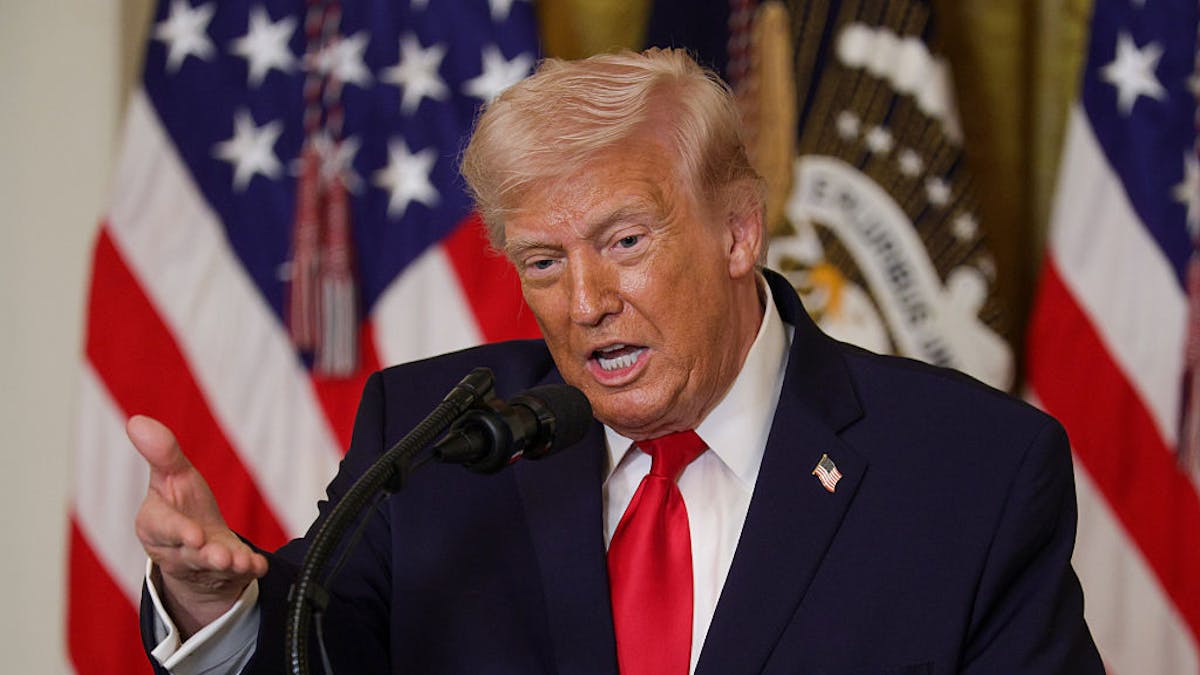
Trump hinted to reporters earlier this week that he would attend Wednesday’s Supreme Court session, sitting in the gallery as the justices hear oral arguments surrounding his executive order banning birthright citizenship.
“I’m going,” Trump said Tuesday. “I think so. I do believe.”
No sitting president has ever attended oral arguments, though they are technically permitted to do so. Trump said he was going to attend oral arguments for October’s “Liberation Day” tariffs case, but later changed course. When the High Court ruled against Trump in that case in February, the president lashed out at the justices — particularly Neil Gorsuch and Amy Coney Barrett, his appointees — calling them a “disgrace to our nation” and suggesting they were corrupted by foreign influences.
Trump reiterated that criticism just days ago at a dinner with the National Republican Congressional Committee.
“The Supreme Court, that’s right, of the United States cost our country — all they needed was a sentence — our country hundreds of billions of dollars, and they couldn’t care less,” Trump said. “They couldn’t care less.”
“They sicken me because they’re bad for our country,” Trump said, once again singling out Gorsuch and Barrett.
Whether or not this heated rhetoric means the president intends to actually attend the session remains to be seen. But Wednesday’s case, Trump v. Barbara, is at least as important to the president as the liberation day tariffs.
Shortly after returning to office last year, the president signed an executive order barring the children of illegal immigrants or foreigners with temporary visas from receiving citizenship upon birth. The order, “Protecting the Meaning and Value of American Citizenship” was swiftly challenged in a number of lawsuits arguing the order violated the 14th Amendment, which affords citizenship to anyone born on U.S. soil regardless of their parents’ immigration status.
That definition of the 14th Amendment’s guarantee of “birthright citizenship,” while commonly held, has come under scrutiny in recent years. The Claremont Institute, which filed an amicus brief in support of Trump’s order, has been at the forefront of the charge to rethink the automatic granting of birthright citizenship.
“The notion that foreign nationals can secure American citizenship for their children merely by being present on U.S. soil — lawfully or unlawfully — has no basis in the text, history, or original understanding of the Fourteenth Amendment,” Claremont Institute president Ryan Williams said, saying Trump’s order promoted “a constitutional understanding of citizenship — one based on consent, allegiance, and a nation’s sovereign right to define its own political community.”
Opponents say that ending birthright citizenship will be detrimental to around 150,000 children born to foreign parents on American soil every year.
While Trump could become the first president to attend oral arguments, he is not the first executive to clash with the Supreme Court.
In 1832, the Court handed down a landmark ruling on Native American rights in Worcester v. Georgia. Conventional wisdom held that President Andrew Jackson would have to intervene to ensure state governments obeyed the Court’s ruling.
Faced with this prospect, Jackson — whom Trump idolizes and whose portrait has hung in the Oval Office during both of the president’s terms — famously, though likely apocryphally, said, “John Marshall has made his decision; now let him enforce it.”
Oral arguments begin at 10:00 a.m. ET.