Every society has an aristocracy, even those that deny or disparage the very idea, such as our own. The word derives from a Greek term roughly meaning “rule of the best” which, it goes without saying, means different things to different people.
In England this was usually defined as the families that accumulated vast swaths of land, served, counseled, and (at times) challenged the ruling monarchs, fought the battles that protected their country’s primacy and, as peers of the realm, transposed themselves into regional dynasties and feudal lords. In America we began with aristocrats who, as landed gentry and local governors, resembled their European equivalents. Now, four centuries later, we tend to think of them in different terms: The commercial aristocrats of the 19th century—the Morgans, Mellons, Rockefellers, and Schiffs—of varying origins, or the 20th-century political dynasties (Taft, Roosevelt, Bush, Kennedy) of varying quality. I once heard Tina Turner described as “rock aristocracy.” Only in America, as it were.
It’s different across the Atlantic, of course, and Eleanor Doughty, a British journalist who has made a career chronicling the “moneyed and titled classes” of her native land, has produced a long, fair, detached, and (perhaps a little too) detailed account of the “modern British aristocracy,” those hundreds of surviving remnants of the titled ruling classes who, for centuries after 1066, possessed colossal wealth, built great estates, and wielded decisive influence in Britain.
That such a volume is now published here in America, and may find a substantial audience, should surprise no one. Whenever a member of the royal family visits the United States, attracting huge crowds and stopping by the White House for a black-tie dinner, we are invariably reproached and reminded that we fought a revolution to rid ourselves of kings, queens, lords, and ladies. True enough. But tell that to readers of Nancy Mitford’s novels or to the millions of our fellow countrymen who tuned in to both TV and movie dramatizations (1981, 2008) of Evelyn Waugh’s Brideshead Revisited. Not so long ago, millions of high-minded PBS viewers hung on to the weekly adventures—the dynastic crises, domestic dramas, and financial woes—of the fictional Crawley family of Downton Abbey, in Yorkshire, seat of the imaginary earls of Grantham.
Indeed, the gigantic success of Downton Abbey might well be explained by the fact that it faithfully reproduced not only the habits and manners of the English upper class, still a subject of endless fascination here and elsewhere, but was equally faithful to the slow, inexorable decline, since the late 19th century, of the aristocracy as a power in England. And yet, while Heirs & Graces is full of entertaining anecdotes, instructive examples, and the tragedies and eccentricities of some of its featured characters, it also reveals that the story of the modern British aristocracy is not just decline and fall but survival, adaptation, reinvention, even prosperity, too.
There are a lot of them, and while they may seem interchangeable to American eyes and ears, they remain in our time a varied and variable crowd. Nowadays, peers include two dozen dukes and (in descending order of precedence) dozens of marquesses, earls, viscounts, and barons. Some possess ancient surnames of Norman origin whose families have lived in the same stately residences—built in medieval times, expanded in the mid-1700s, with indoor plumbing added during Queen Victoria’s reign—for centuries. Others are younger sons and occasional daughters of noble families, descendants of generals such as Winston Churchill’s ancestor the Duke of Marlborough, party politicians, entrepreneurs of the Industrial Revolution, newspaper owners, financial supporters of certain prime ministers, inventors, even poets and historians, ennobled by the governments of their day for one reason or another.
There are 24th earls of such-and-such, who trace their titles to William the Conqueror, and 2nd viscounts of so-and-so whose fathers served in socialist cabinets.
Some peers are scholars, clergymen, artists, and craftsmen; some are scoundrels and misanthropes, gamblers and communists. Many live in the United States and Canada, Australia, or on the Continent. Some were, and remain, astonishingly rich; others have squandered fortunes or struggle to send their sons and daughters to public (in America, private) schools. A few may be accurately described as penurious; most tend to hover somewhere in the upper middle class. For more than a few, money is manifestly a chronic challenge. Some have successfully navigated the modern economy and are now well represented in banking, business, and high-tech ventures. Others have entered the professions, once the province of the genteel middle class, or gone into “trade,” or pursued careers in education or arts administration.
Some families have been so diminished by Britain’s punitive inheritance taxes that they cannot maintain the historic residences they inherit and are forced to sell. The postwar Labour government seemed to take delight in confiscating the wealth of aristocratic families by way of taxation, or eminent domain—a disturbingly high number of historic houses could not find buyers, or patronage from the National Trust, and were demolished. It took many years for the British to grasp that the great landed estates, if not their owners, were in fact a vital component of Britain’s heritage and, not least, buildings and gardens of great architectural, as well as historic, interest and significance.
If there is any unifying theme to the stories in Heirs & Graces—and I would identify two—they are problems unfamiliar to most American readers. The first is that, while the titled aristocrats of Britain no longer exert the political powers they once possessed, a surprisingly high number of them retain a local and regional status which, while feudal in origin, has persisted well into modern times. They are lord lieutenants of counties, honorary high sheriffs, chairmen (or chairwomen) of charitable institutions and philanthropic organizations, chancellors, board members, local civic eminences.
They contend with their noble identities in various ways. Some are proud of their titles and family histories and accept as their due a certain renown, even deference. Others—the Dukes of Bedford and Devonshire, the Marquesses of Hertford and Bath, and more—have opened their houses to the public for profit and fun. Some happily embrace lives and livelihoods they might not otherwise have chosen. Still others prefer to be known as Mister rather than Lord Whatever and find their titles, and especially their inherited residences and dynastic responsibilities, burdensome.
The second problem is that, until 1999, all peers were entitled to be members of the House of Lords. But modern Labour governments seem committed to reducing the Upper Chamber to irrelevance, if not abolishing it altogether. Life peers, contemporary worthies whose titles die with them, still sit in the House of Lords, but the Tony Blair government severely limited the number of hereditary peers entitled to seats, and Sir Keir Starmer’s government appears determined to bar them all.
In a society that still values its status as a constitutional monarchy, there is an irony here. Ostensibly it is fair to observe that the presence of men and women in Parliament by virtue of birth is less than democratic. But if Heirs & Graces makes any implicit point, it is that the surprising resilience and variety of the “modern British aristocracy” may well be considerably more representative of contemporary Great Britain than the all-too-predictable throng of party politicians in the House of Commons.
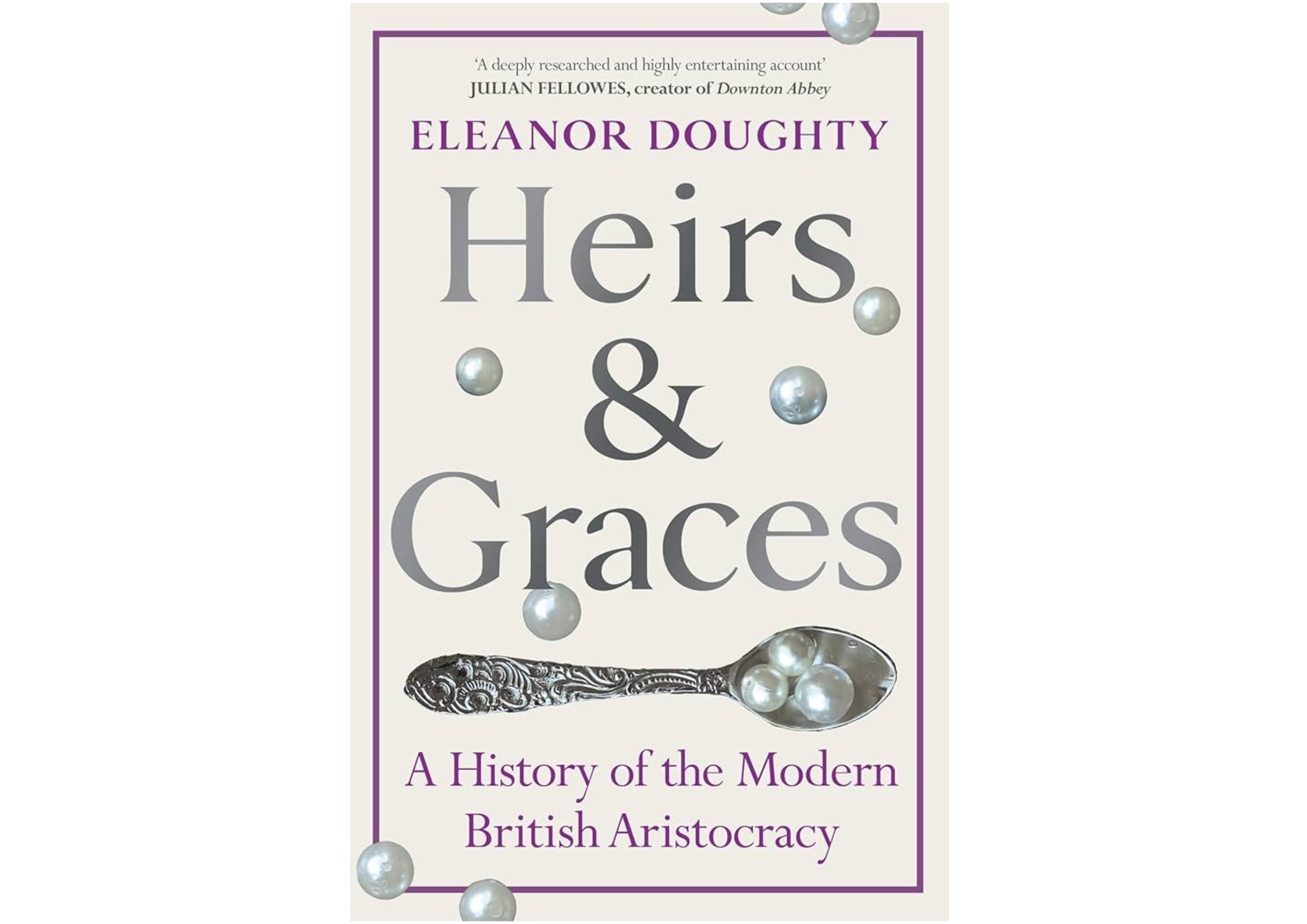
Heirs & Graces: A History of the Modern British Aristocracy
by Eleanor Doughty
Hutchinson Heinemann, 576 pages, $56.99
Philip Terzian, former literary editor and senior writer at the Weekly Standard, is the author of Architects of Power: Roosevelt, Eisenhower, and the American Century.
The post Peerage Pressure appeared first on .