Progress on inflation, immigration, crime and jobs? All imaginary, the Times insists
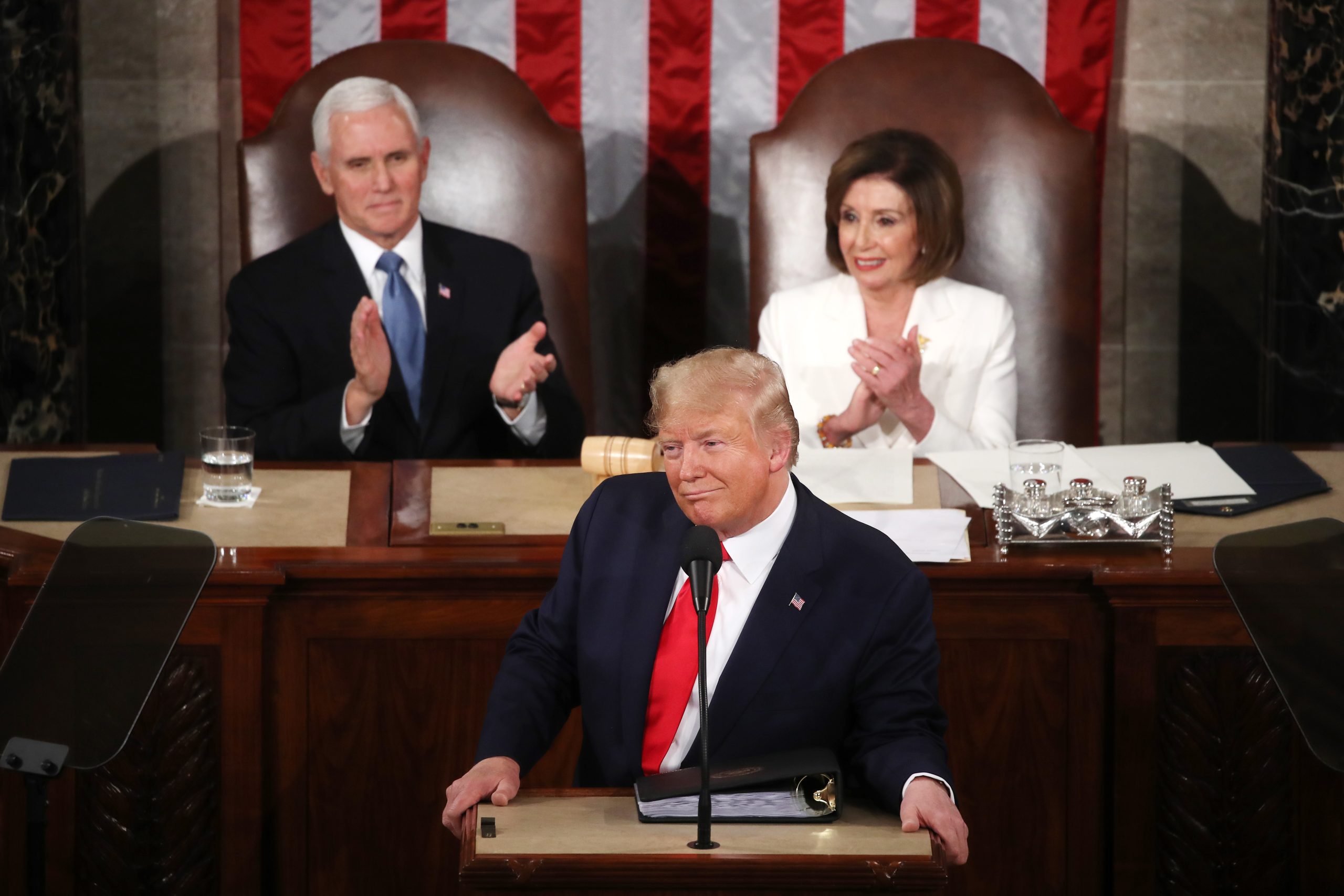
Before the State of the Union address, politicians and interest groups from the party opposite the president sometimes offer “prebuttals,” denunciations of the president’s remarks even before they’ve been released or spoken. These anticipatory denunciations of unseen, undelivered remarks are the stuff of speculative, spin-cycle political talking points, not news.
Yet this year, the New York Times broke with precedent and ran a print article headlined “Wobbly Claims on Jobs, Inflation and Crime,” assailing President Donald Trump’s State of the Union speech before he even delivered it.
The “fact check” carries the byline of the factually challenged New York Times “fact-check” reporter Linda Qiu. The New York Times uses her pedantically against Trump but not against New York City’s truth-stretching mayor Zohran Mamdani. This latest column is entirely off base when it comes to the substance, attempting to undermine Trump’s claims of progress on inflation, jobs, crime, and immigration. On immigration, the Times rolled out fact-checking terminology—”slightly exaggerated”—that is comical in its demonstration of Times bias. When the Times fact-checkers discover Democrats saying things slightly exaggerated, they call them “mostly true.”
What’s more than slightly exaggerated is any pretension remaining at the Times that the newspaper is nonpartisan rather than totally in the tank for the Democrats.
Did the newspaper run prebuttals of Biden’s State of the Union addresses? I looked and found a 2023 piece by Qiu. It ran online only, not in print, and with the more neutral headline, “Fact-Checking Biden Before the State of the Union,” a far cry from the accusatory “Wobbly Claims” language used against Trump. Biden’s 2022 State of the Union got no preemptive fact check. In advance of the 2024 State of the Union, the Times ran in print a similarly anodyne headline: “Evaluating Biden’s Recent Talking Points on Taxes, Industry and Jobs.”
The lore about one sports editor who preceded me by a few years on my college newspaper was that he was so fast he used to write the stories, lay out the pages, and have the paper all closed out before the games had even been played. The New York Times has taken the same approach to fact-checking President Trump, running a fact-check column that the speech was “wobbly” before the speech was even given. In this case, though, instead of illustrating managerial competence, it illustrates that the paper has its mind made up about Trump.
It also illustrates the limits of the fact-checking construct. There may be complaints about Trump on immigration that widely resonate with voters. He’s made it more difficult to get construction work done on your house, or he’s got poorly trained, masked agents running around snatching people off the streets with limited due process. Complain that it’s cruel (though allowing the country to be invaded freely by criminals is also cruel), or that it’s not pro-growth (though having an underclass of illegal residents camped out in American cities may not exactly be pro-growth, either). But to criticize Trump on immigration, as the Times does, by claiming that he has “slightly exaggerated” because “the numbers had fallen sharply in 2024, and decreased even more under Mr. Trump” is to engage in gotcha journalism of the most shortsighted variety. If Trump is doing as much violence to the truth as his worst critics claim, why does the Times even need to bother with statements that are merely “slightly exaggerated”? Isn’t “slightly exaggerated” pretty much the definition of a political speech, anyway?
Anyway, one of the dangers of having a “fact-check” reporter, for a newspaper trying to pretend to be journalistically fair and neutral, is that rather than appearing factual, the newspaper winds up looking political. In this instance, the Times made that mistake, eroding what little remains of its credibility by publishing a partisan fact check before Trump’s speech was even delivered. If the Times used Washington Post-style Pinocchio nose symbols for whoppers, this Times fact-check column would deserve a hefty dose itself. After the Washington Post fact-checker, Glenn Kessler, left that newspaper, the Post decided to discontinue the feature. Kessler later acknowledged to me that, as fact-checker, he’d been “completely wrong” on the Wuhan lab leak headline. Maybe if the Times ever parts ways with Qiu, she’ll have a similar confession to make about the merits of publishing a critical fact check of a Republican State of the Union address before it happens.
The only counterargument—Times customers love it. “This article needs to be made into a simple poster and sent to cities and towns all over the country,” one Times reader comment, recommended by 304 other Times readers, says. “Send it everywhere! Put it on t shirts. Wave it on flags! We are currently living in a kind of Russian disinformation landscape, where Trump tries to completely recast the Biden administration. Biden was a great president!” The service the Times is providing these readers isn’t independent news and information, it’s partisan political validation. If there’s anything that gives a twinge of sympathy for Qiu or her editors, it’s that their wages are paid by subscribers laboring under the delusion that “Biden was a great president!” That’s one story that, as the newsroom phrase goes, is too good to check.