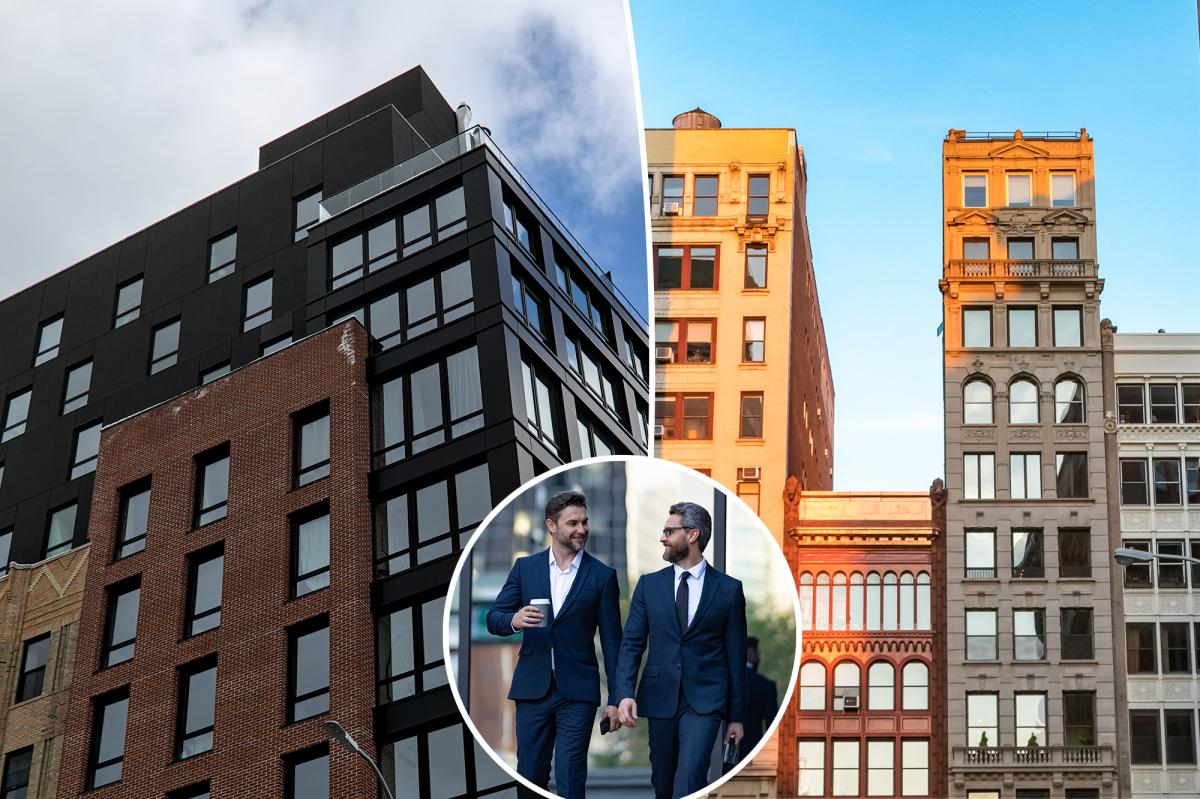
Manhattan’s luxury housing market is quietly edging back toward its mid-2010s swagger after a decade marked by excess, collapse and recovery. And this time, the rebound appears to be powered by real money, not just empty supply.
New data shows the borough’s priciest homes are nearly back to their 2016 highs, a milestone last seen during the condo boom that reshaped Manhattan’s skyline.
By the end of last year, the median price for a luxury home — defined as the top 10% of the market — hit $6.39 million, according to a new report from Douglas Elliman.
That figure remains slightly below the last peak, but is up more than 6% from the prior year, signaling renewed strength at the top end.
Luxury deal volume is telling a similar story. Roughly 1,143 high-end homes sold last year. This virtually matches 2016 levels and marks a double-digit increase from 2024 — a notable rebound after years of pandemic-era disruption and higher borrowing costs.
But unlike the last boom, today’s price gains aren’t being driven primarily by tight inventory, according to appraiser Jonathan Miller, who authored the report.
Less than half of current price strength can be attributed to supply constraints, Miller told The Post, with the bulk tied instead to a strong local economy and a revived Wall Street bonus cycle.
That distinction matters.
During the 2016 surge, luxury pricing was skewed by a flood of newly built towers offering oversized units at record prices.
Over the past decade, much of that excess inventory was absorbed, and few comparable projects followed, setting the stage for today’s tighter but more stable market.
The luxury sector also proved more resilient coming out of the downturn.
While prices fell sharply in the early 2020s amid outmigration and remote-work uncertainty, high-end homes rebounded faster than the broader market, in part because affluent buyers rely less on financing and are more insulated from interest-rate shocks.
Still, the recovery has been uneven.
Across Manhattan, the median sale price for all homes now exceeds 2016 levels, but outcomes vary dramatically by neighborhood and property type.
Downtown condo prices remain below their last peak, while co-ops in the same areas have quietly gained ground.
Some enclaves saw striking reversals: Greenwich Village condo prices plunged over the decade, while Soho and Tribeca eked out gains. Chelsea lagged across both condos and co-ops, while the East Side told a mixed story, with Upper East Side condos surging and Carnegie Hill units sliding.
Luxury co-ops, however, have broadly outperformed condos in recent years — a shift that reflects long-term stabilization rather than sudden popularity.