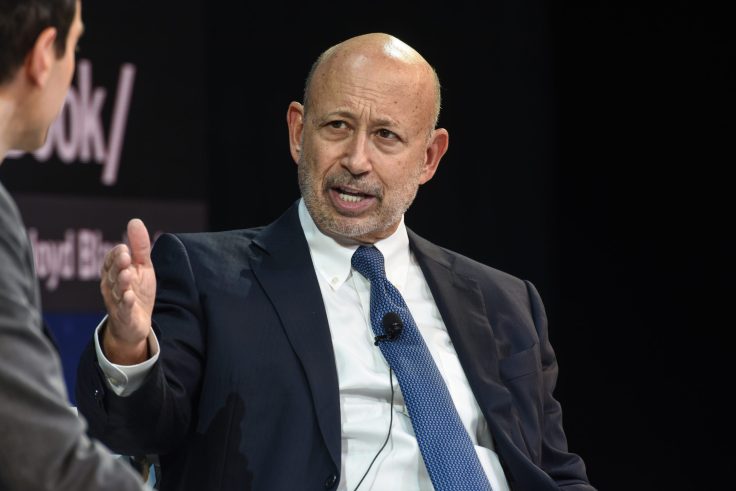
From a very young age, Lloyd Blankfein, the former chairman and CEO of Goldman Sachs from 2006 through 2018, was destined to work on Wall Street. His commercial instincts first began to show at the age of six when he became the neighborhood market maker for used comic books. By 13, he was selling concession food on commission in the stands at Yankee Stadium. By his formative teenage years, he had developed a transactional approach to life—”sizing up different kinds of people quickly” to see how they could be useful to him and then adjusting his outward persona like a chameleon to get what he wanted.
In his memoir, Streetwise: Getting to and Through Goldman Sachs, Blankfein traces his life from the mean streets of Brooklyn to the meanest street of all, Wall Street, where he spent the entirety of his 36-year career in finance at Goldman. Growing up during the 1960s in a traditional Jewish family of little means, he was driven from a young age to escape “the projects” of East New York and “see the world,” the latter code for improving his economic lot in life. Realizing early on that a good education was his ticket to ride, Blankfein redoubled his efforts in school, doing so well that he was able to skip the eighth grade. In high school, he scored nearly perfect on his math SAT and graduated as the class valedictorian at the age of 16. He was accepted to Harvard (among other Ivy League schools), majoring in history, and then stayed on at Cambridge to get his Juris Doctor degree.
Four years of working on dry legal contracts, however, were enough to convince Blankfein that the law was something he would prefer not to do for a living. In 1982, he abruptly switched careers and made the jump to the rough-and-tumble world of Wall Street, landing a job at the commodities trading firm, J. Aron & Company, a subsidiary of Goldman Sachs. Despite having no educational background or direct work experience in business or finance, Blankfein was able to quickly excel in the esoteric financial markets of physical commodity sales, interest rate swaps, and foreign exchange hedging. Within six years, he was made a Goldman partner at the age of 34.
Blankfein’s Horatio Alger story growing up is an inspiring one, even though he attributes much of his early success to dumb luck and good fortune—whether earning top grades from “public schools that were failing” or applying to Harvard “almost as a joke” or “getting into Goldman through the back door”—rather than his own hard work and perseverance. Luck and timing would play a much more important role during the next phase of his career as he successfully sidestepped market blowups (particularly the 1994 bond market rout) and dodged personal blame for management lapses (including his failure to detect Robert Maxwell’s financial fraud in 1991) to steadily climb the corporate ladder at Goldman.
Fortuitously, Goldman’s decision to finally go public in 1999 helped to thin out Blankfein’s competition since the IPO netted each partner an average of $84 million and fueled an exodus of senior talent over the following years. Then in the early 2000s, every heir apparent remaining in Blankfein’s way grew impatient and pulled the rip cord, just before Chairman and CEO Hank Paulson left unexpectedly in 2006 to join the George W. Bush administration. In his inexorable rise to the top of Goldman, the street-smart, Brooklyn-bred Blankfein clearly remembered the two cardinal rules of pick-up basketball: Keep your elbows sharp and always hang around the ball.
Blankfein takes over the Goldman reins just as the global financial crisis was gathering pace, placing the firm on a protracted war footing and setting the combative tone for the duration of his CEO tenure. Readers looking for a fresh perspective on the market events of 2008 will come away disappointed since Blankfein’s account seems carefully curated from his public testimony to the Financial Crisis Inquiry Commission, with an almost third-person feel to the narrative. (Blankfein acknowledges former Slate editor Jacob Weisberg helped him write his book.)
Sadly, he does not answer the one nagging question from 2008 that persists to this day: Why did U.S. regulators only step in aggressively to save the financial system when it looked like Goldman would be the next investment bank to fail in serial fashion? Did this have anything to do with the fact that Goldman alumni—led by Blankfein’s former boss, Treasury Secretary Paulson—were the main government decision-makers at the time, and many of them still held stock in the company? Blankfein rhapsodizes about the “invisible thread connecting Goldman partners” and how “long-departed former staff still feel such a strong connection” to the firm, yet he dismisses any charges of favoritism as “baseless suspicion” and “conspiracy theories.”
Nearly a decade after retiring, the author Blankfein remains a steadfast steward and tireless defender of the firm’s culture and reputation by rejecting pretty much any criticism of Goldman—whether before, during, or after the crisis—as the product of competitive envy, political posturing, or media hype. He gives short shrift to the business scandals (e.g., Goldman’s financing of the massive 1MDB government embezzlement scheme in Malaysia in the early 2010s) and strategic missteps (such as the firm’s ill-fated 2016 push into consumer lending) that occurred on his watch. Most of the diversity, climate, and sustainability initiatives started during the Blankfein years have not aged well, while Goldman’s longstanding financial ties to Communist China have come under greater scrutiny of late. Other than a speed round of anodyne comments to wrap up the book, there is no serious self-reflection or second-guessing of his leadership calls and certainly no mea culpas issued.
Blankfein’s corporate blinders also get in the way of personal epiphanies. One of the most vivid memories from Blankfein’s youth is seeing the “soul-destroying” work that his father did as an overnight clerk at the U.S. Post Office—a “mindless job” that did not pay well and would soon be eliminated by office automation. His father’s chosen career was a source of both motivation and deep embarrassment for Blankfein throughout his life. So, it is surprising that he does not address any of the recent headlines about the revolt by Goldman junior staff against workloads and quality of life issues.
Other than ruminating cryptically about the firm becoming “a little less special,” he never acknowledges that working at Goldman is no longer universally seen as the Wall Street equivalent of the golden ticket to Willy Wonka’s chocolate factory. Manning the phones all day on the trading floor or pulling all-nighters preparing investment banking pitches can be equally soul-destroying, regardless of the annual compensation. To boot, AI is now rapidly displacing many of these formerly coveted entry-level positions at Goldman as well as across the financial industry. The 71-year-old billionaire Blankfein never connects these dots, providing an ironic twist to his autobiographical paean to Goldman Sachs.
Streetwise: Getting to and Through Goldman Sachs
by Lloyd Blankfein
Penguin Press, 400 pp., $35
Paul Tice is a senior fellow at the National Center for Energy Analytics, an adjunct professor of finance at the New York University Stern School of Business, and author of The Race to Zero: How ESG Investing Will Crater the Global Financial System.