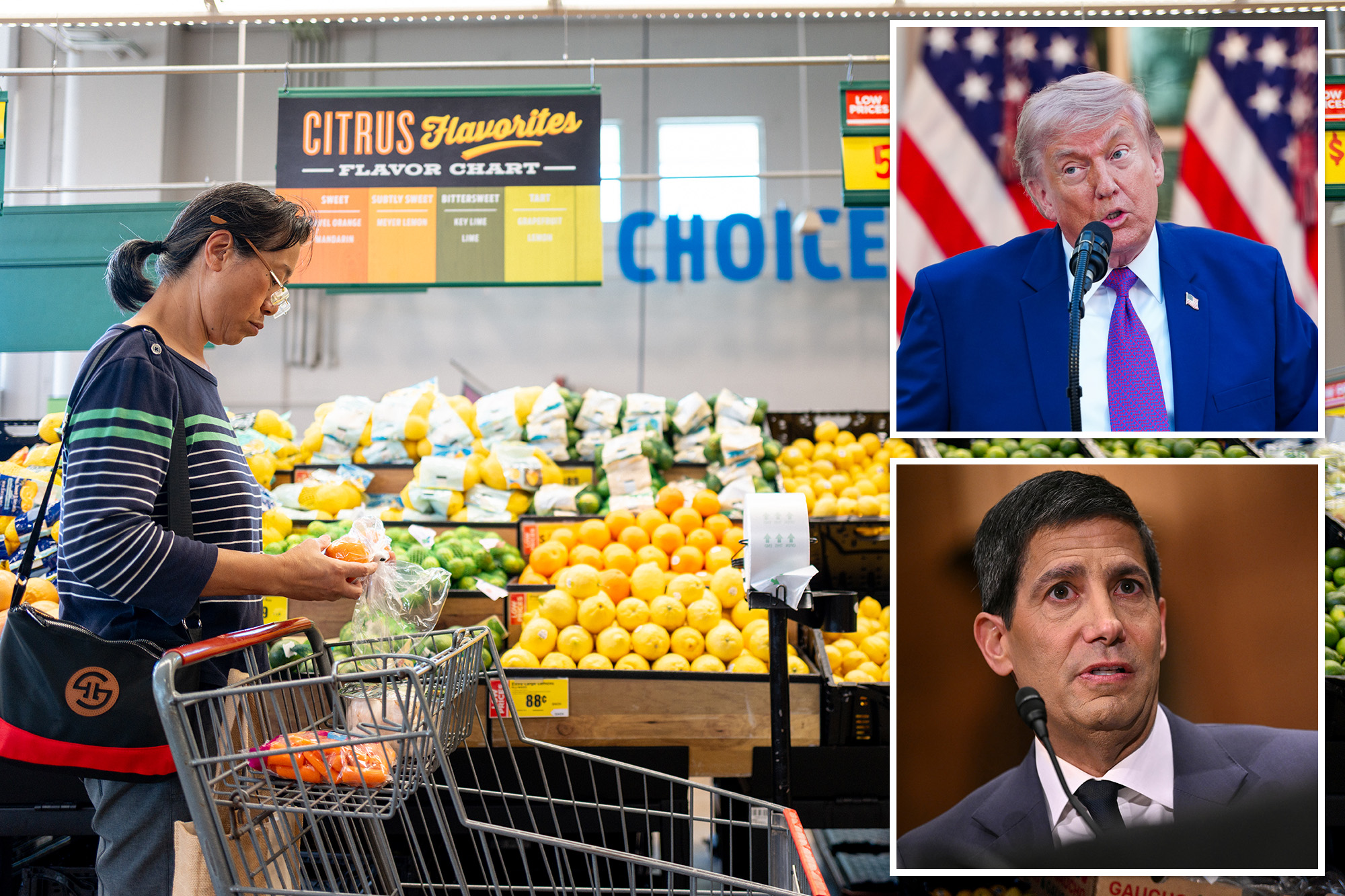
Kevin Warsh was confirmed as the next Federal Reserve chairman on Wednesday — even as surging inflation has begun to box the central bank into one of its toughest corners in years.
The Senate held a final confirmation vote Wednesday to elevate President Trump’s pick to Fed chairman after lawmakers approved Warsh to a 14-year term on the Fed’s Board of Governors in a narrow 51-45 vote a day earlier.
Powell’s term as chair expires Friday, though he is expected to remain on the Fed’s board as a governor — an unusual arrangement that could create tensions inside the central bank as Warsh begins reshaping monetary policy.
For Warsh, the concerns are more immediate — particularly over mounting inflation.
“The Fed has a predicament,” Derek Reisfield, co-founder and original chairman of MarketWatch, told The Post.
“While there is a lot of pressure to lower rates, typically in a rising inflation environment, the Fed would be hesitant to lower rates. That might fuel inflation more.”
Warsh is expected to replace outgoing Chair Jerome Powell by the end of the week — inheriting an economy where inflation is heating up again even as the White House pushes for lower borrowing costs.
Fresh inflation data released this week showed consumer prices rose 3.8% in April from a year earlier — the highest annual reading since mid-2023 and a sharp acceleration from March’s 3.3% pace.
Core inflation climbed 2.8% year over year, while the Fed’s preferred core PCE gauge remains above 3%.
That leaves Warsh trapped between competing political and economic pressures before he even steps into the chairman’s office.
Skanda Amarnath, executive director of Employ America and a former Fed economist, told The Post inflation has now “outperformed quite considerably” for months — even after stripping out volatile gasoline prices.
“We’re averaging something close to 4% on the Fed’s key inflation gauges,” he told The Post.
“Even the more flattering inflation measures Warsh pointed to at his confirmation hearing are now turning the other way.”
Powell is staying on the board in part because he says the controversy surrounding the Fed’s over-budget headquarters renovation project still has not been fully resolved.
The project triggered a Justice Department probe into whether Powell misled Congress about soaring renovation costs, and while prosecutors ultimately dropped the criminal investigation, Powell has said he wants to stay until the matter is “well and truly over” and the Fed’s independence is protected from political pressure.
DOJ officials have said that they may revisit the criminal case if the Fed’s Office of Inspector General (OIG) finds evidence of misconduct.
Reisfield said one of the biggest drivers behind the recent inflation spike has been turmoil surrounding the Strait of Hormuz, where disruptions have driven up oil and energy prices while choking off key industrial inputs from the Persian Gulf.
“These are all basic supply inputs to a ton of things, like fertilizer, computer chips, etc.,” Reisfield said.
“So everything that relies on those inputs, which is pretty much everything in our economy, is going to cost more.”
The key question for the Fed, according to Reisfield, is whether policymakers view the latest inflation surge as temporary.
“If the Iran war is over soon, those prices will drop,” he said. “One question will be how quickly.”
Amarnath said Wall Street may still be underestimating the possibility that the Fed eventually raises rates again if inflation remains stubbornly high.
“The debate now is why or why not hike — not why or why not cut,” he said.
That scenario would create a direct collision with Trump, who has repeatedly blasted Powell for refusing to slash rates aggressively enough.
Warsh himself has spent years warning that the Fed lost credibility after flooding the economy with easy money following the pandemic.
At his Senate hearing last month, Warsh attacked the central bank’s 2020 policy overhaul, arguing it fueled “the inflation surge … we’re still living with.”
He also criticized Fed officials for telegraphing rate decisions too aggressively.
“We need central bankers who are humble, who are nimble, who are open-minded, who can react,” Warsh told lawmakers.
But Warsh has also recently argued that artificial intelligence could unleash a productivity boom that eventually lowers inflation pressures and allows rates to fall over time.