Trump added that U.S. military operations are ‘way ahead of schedule’ and the United States has sunk at least 154 Iranian ships
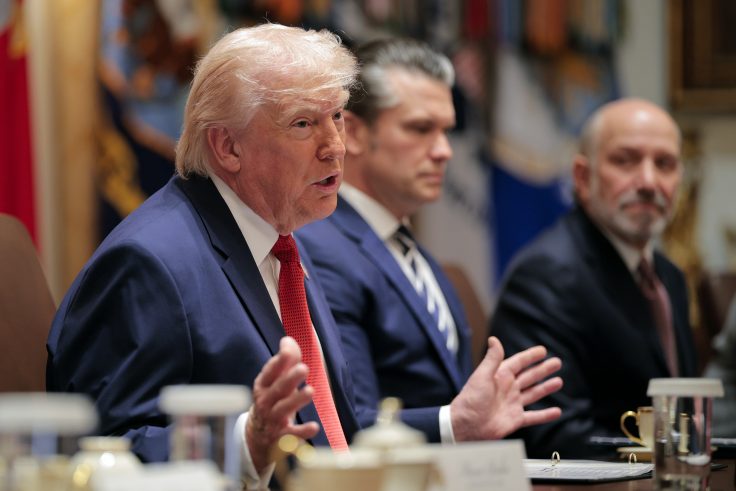
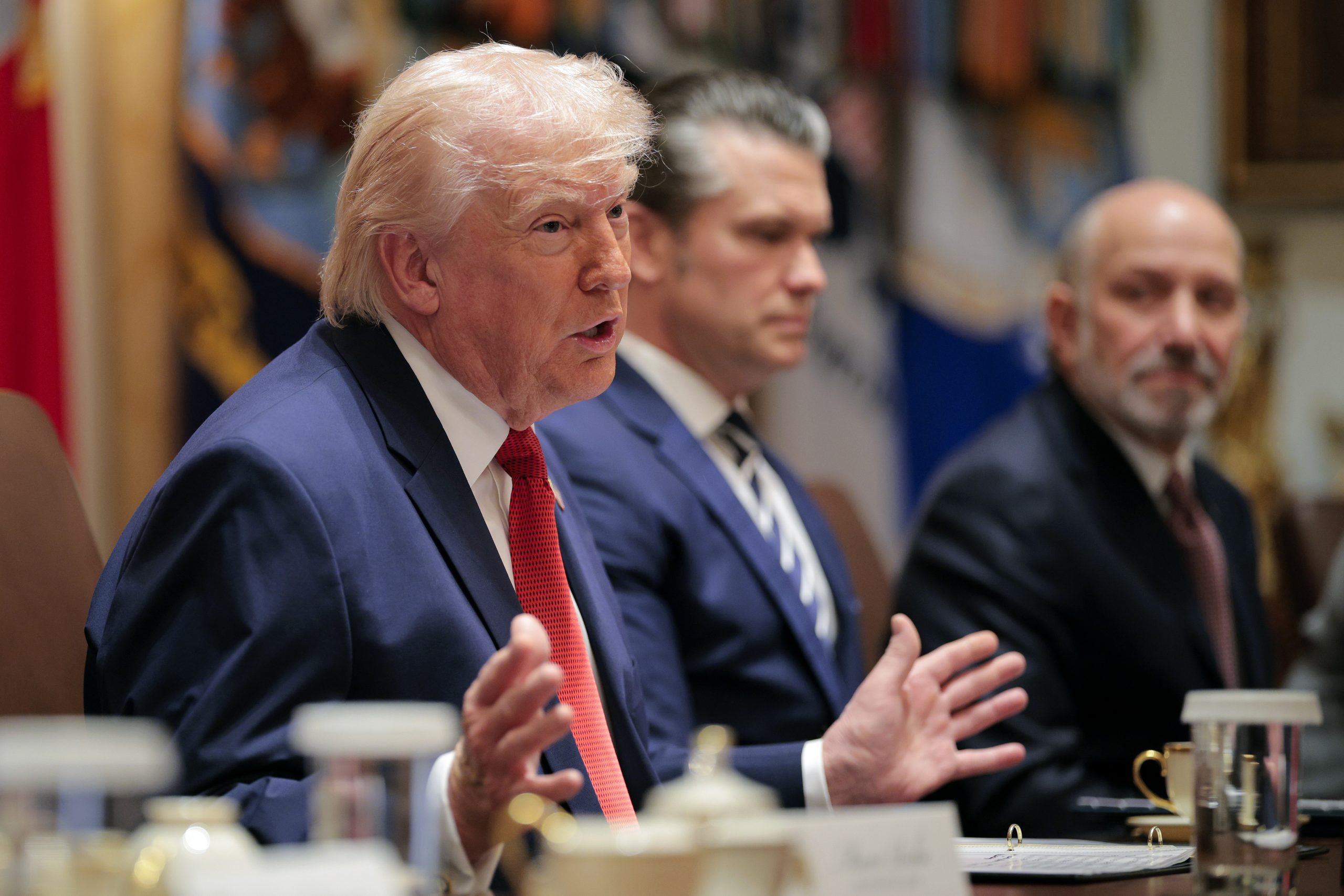
President Donald Trump said Thursday that the Iranian regime has “been just beat to s—” and is now “begging to make a deal” to end the conflict in the Middle East.
“The reason they want to make a deal is they have been just beat to s—,” Trump told reporters during a cabinet meeting at the White House.
“They are begging to make a deal, not me, they’re begging to make a deal,” the president said of the regime. “And anybody that saw what was happening over there would understand why they want to make a deal … I don’t know if we’ll be able to do that. I don’t know if we’re willing to do that. They should’ve done that four weeks ago.”
The president also disclosed that Iran permitted several commercial vessels to sail through the Strait of Hormuz earlier this week as a sign of good faith during diplomatic talks.
“They said, ‘To show you the fact that we’re real and solid and we’re there, we’re going to let you have eight boats of oil,'” Trump said of the private discussions between his team and regime representatives. Ten oil tankers in total ultimately made their way through the contested commercial shipping lane this week, Trump said.
He added that U.S. operations have afforded Iran the opportunity to “permanently abandon their nuclear ambitions and chart a new path forward.” But if Tehran does not accept the United States’ terms, “we’re their worst nightmare.”
The president noted that U.S. military operations were initially expected to last “four to six weeks” but are now “way ahead of schedule” after the United States destroyed much of the Islamic Republic’s land, air, and sea capabilities. At least 154 Iranian ships “are resting very nicely at the bottom of the sea” and Tehran’s air force is in ruins, Trump said.
“The Iranian regime is now admitting to itself that they have been decisively defeated,” the president added. “They’re talking to us because they’ve got a disaster on their hands. They’re defeated. They can’t make a comeback.”
The cabinet meeting came after a Thursday morning Truth Social post in which the president said the regime has a limited amount of time to review his ceasefire offer.
“They publicly state that they are only ‘looking at our proposal,'” he wrote. “WRONG!!! They better get serious soon, before it is too late, because once that happens, there is NO TURNING BACK, and it won’t be pretty!”
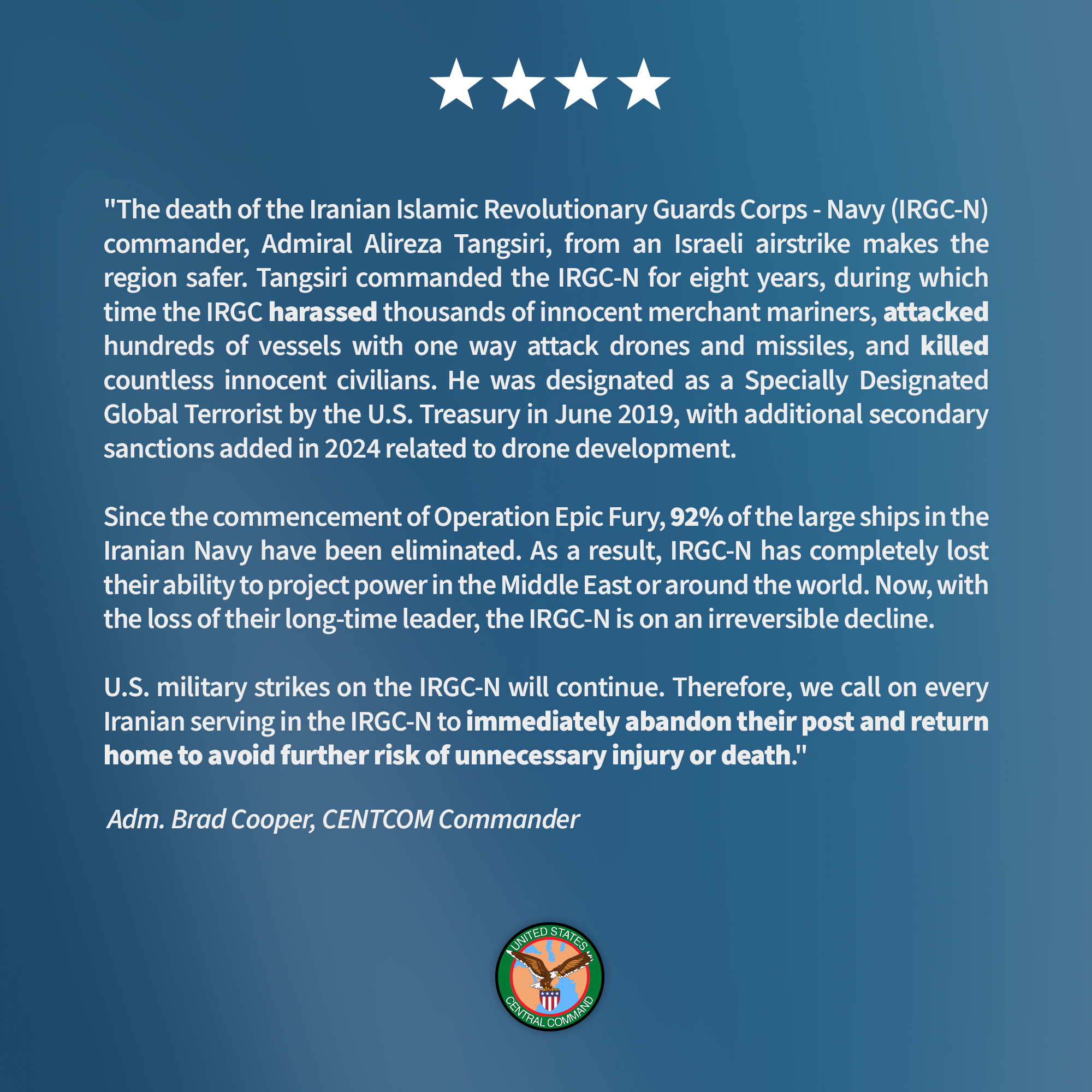
Iran lost another of its top naval commanders overnight, when an Israeli airstrike eliminated Islamic Revolutionary Guard Corps Navy (IRGC-N) leader Admiral Alireza Tangsiri. U.S. Central Command (CENTCOM) confirmed Tangsiri’s death just before Trump spoke at the White House.
“Since the commencement of Operation Epic Fury, 92 percent of the large ships in the Iranian Navy have been eliminated,” CENTCOM chief Brad Cooper said in a statement. “As a result, IRGC-N has completely lost their ability to project power in the Middle East or around the world. Now, with the loss of their long-time leader, the IRGC-N is on an irreversible decline.”
While it is unclear what Iranian representatives are saying behind closed doors, the regime has publicly maintained that no ceasefire is on the table even as it takes mounting military losses.
“Iran does not accept a ceasefire,” a senior Islamic Republic leader told the state-run Fars News Agency on Wednesday. “Basically, it is not logical to enter into such a process with those who violate the agreement.”
Tehran has floated its own version of a deal that is drastically different from Trump’s. The regime demands a “guarantee” that “war will not recur” and that the United States shutter all its military bases in the region. It also listed reparations for regime infrastructure destroyed in the engagement and control of the Strait of Hormuz.
The U.S. proposal, by contrast, is similar to the conditions set for negotiations prior to Operation Epic Fury. Iran would have to dismantle its nuclear facilities in Natanz, Isfahan, and Fordow, as well as significantly scale back its ballistic missile program. Tehran would also have to guarantee safe passage for commercial vessels in the Strait of Hormuz.
Steve Witkoff, Trump’s lead negotiator, said he is now working to convince Tehran “that this is the inflection point with no good alternatives for them other than more death and destruction.”
“We have strong signs that this is a possibility,” Witkoff said without discussing specific terms. “If the deal happens, it will be great for the country of Iran.”