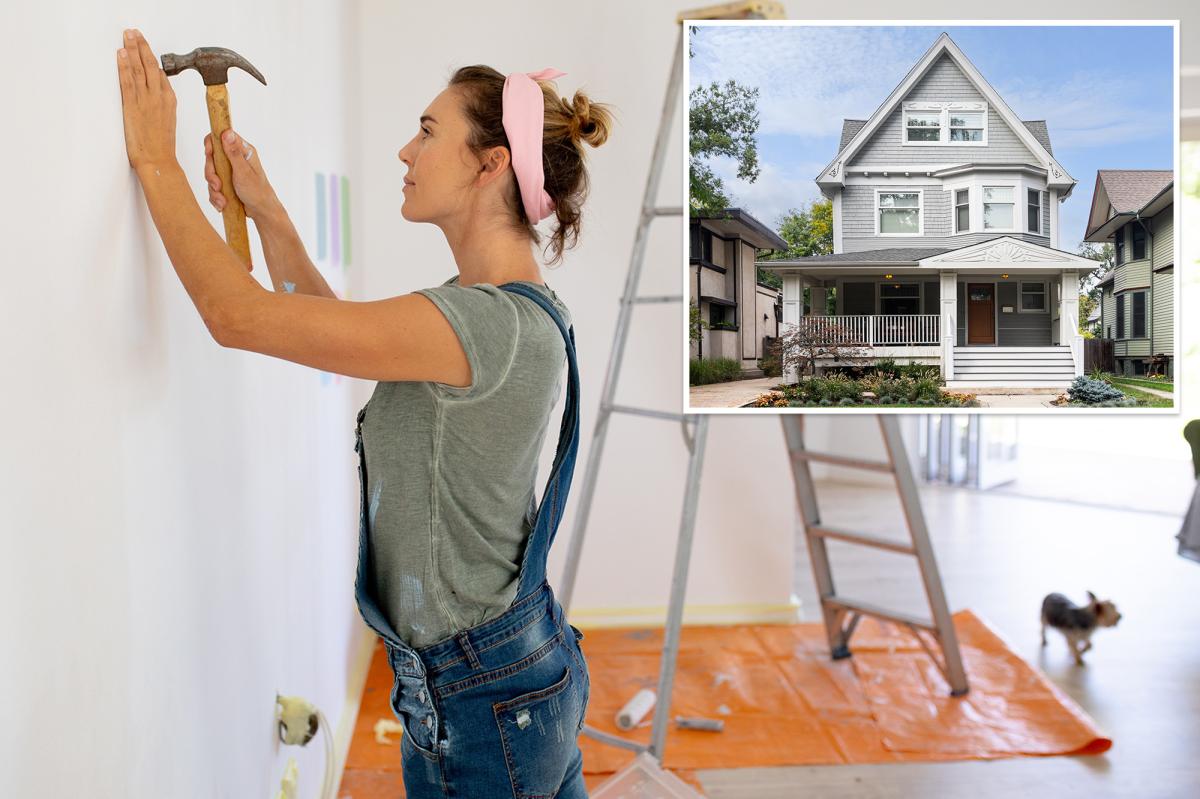

Home flipping hit a wall in 2025 with resale profits plummeting to their lowest levels in nearly 20 years, falling victim to a high-cost, high-interest market.
The number of single-family homes and condominiums that were flipped nationwide last year decreased nearly 4% from 2024, down to 297,045, marking the lowest number of flips since 2020, according to the latest data from ATTOM, a provider of property data and real estate analytics.
Significantly, as median home sales prices peaked last year, the average investor saw their gross profits—the difference between the median resale price and the median price originally paid—shrink to just $65,981, down from $77,000 the year before.
That represents a 25.5% return on investment (ROI), the lowest recorded since 2008, when the U.S. was in the throes of a global financial crisis.
In the decade following the Great Recession, home flipping was all the rage, with the typical buyer spending less than $150,000 on a property and then reselling it for $225,000 or higher.
But much has changed since the home flipping boom years, with both borrowing costs and home prices surging post-pandemic.
“Competition for homes remains strong in many markets due to constrained supply,” says Rob Barber, CEO of ATTOM. “With prices staying elevated, investors are finding it harder to secure deals that deliver strong returns.”
The other thing that has changed is homebuyers’ preferences in the high mortgage rate environment of 2025.
Realtor.com research shows that house hunters are less interested in flipped homes now than they were in 2021, when rates were near record lows.
“Affordability is what is keeping people out of the market, so they are not very responsive to paying more for a home that someone else has chosen the finishings for,” says Realtor.com senior economist Joel Berner. “They prefer to buy fixer-uppers and put in the sweat equity themselves.”
For investors, these shifts mean they have to get more creative to maintain profitability.
“That could include taking on older homes, as the median flipped property in 2025 was built in 1978, the oldest since we began tracking, along with tighter cost control and more disciplined renovation strategies,” says Barber.
Home flipping hot spots and dead zones
The home flipping rate, as a share of total sales, fell year over year in 142 of the 215 metros with populations of at least 200,000 people and at least 100 home flips in 2025 analyzed by ATTOM.
Salisbury, MD, experienced the sharpest pullback, with the metro’s home flipping rate plunging more than 42% compared with 2024, followed by Tallahassee, FL (-37.5%); Lafayette, IN (-36%); Evansville, IN (-32.9%); and Warner Robins, GA (-32.6%).
However, a third of the metros cited in the report saw growth in the home flipping rate, with the largest gains recorded in Binghamton, NY (up 126.4% from 2024); Boulder, CO (+72.4%); Greeley, CO (+49.4%); Lexington, KY (40.3%); and Scranton, PA (+31.2%).