The crew of NASA’s Artemis II mission spent Monday looking at parts of the moon that had never been seen by the human eye — and they paused briefly to pay a one-of-a-kind tribute to a lost family member.
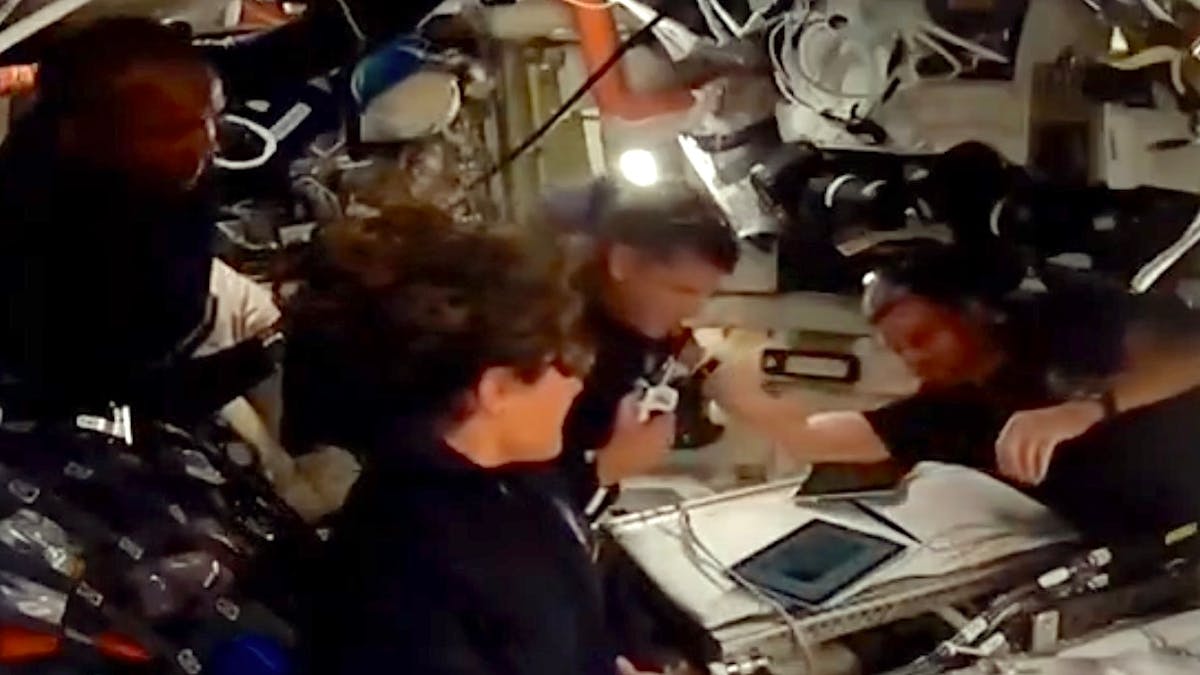
The crew shared video on Instagram as they discussed the new features and craters they’d observed while seeing the far side of the moon for the first time, and shared the names they’d chosen for two of them: Integrity, for their spacecraft; and Carroll, for mission Commander Reid Wiseman’s late wife who died of cancer in 2020 at just 46 years old.
“Our science team helped us out with a couple of relatively fresh craters on the moon that have not been previously named, and our crew would like to propose a couple of potential names for those items or those areas,” Canadian astronaut and mission specialist Jeremy Hansen explained. “We spent a bit of time this morning looking out the window and we’re able to see them now, both with our naked eye and through the long lens, and so we feel this is a good time to send this down, and a special shout out to Kelsey for helping us with this.”
Hansen said that the first of the two features was a crater that the crew wanted named “in honor of our great spacecraft Integrity,” but the second was one that held far deeper meaning for the members of the Artemis II crew.
“A number of years ago, we started this journey [with] our close-knit astronaut family and we lost a loved one, and there’s a feature and a really neat place on the moon and it is on the near side/far side boundary, in fact it’s just on the near side of that boundary, and so at certain times of the moon’s transit around earth you can — we will be able to see this from earth. And so we lost a loved one, her name was Carroll, the spouse of Reid, the mother of Katey and Ellie,” Hansen said, his voice breaking. Wiseman could be seen in the video wiping away tears, as could mission specialist Christina Koch.
“And if you want to find this one, you look at Glushko and it’s just to the northwest of that at the same latitude as Ohm and it’s a bright spot on the moon. We would like to call it Carroll,” he continued, his voice still shaky as he spelled out the name.
The microphone cut then, and the three other astronauts quickly converged on Hansen, enveloping each other in a zero-gravity group hug.