
Quinoa may have met its match.
An ancient grain from the Middle East, freekeh may not be as well-known as other superstar grains.
But its nutritional profile matches up in several ways, and even gives quinoa a run for its money in some essential nutrient content that boosts your brain, metabolism and more.
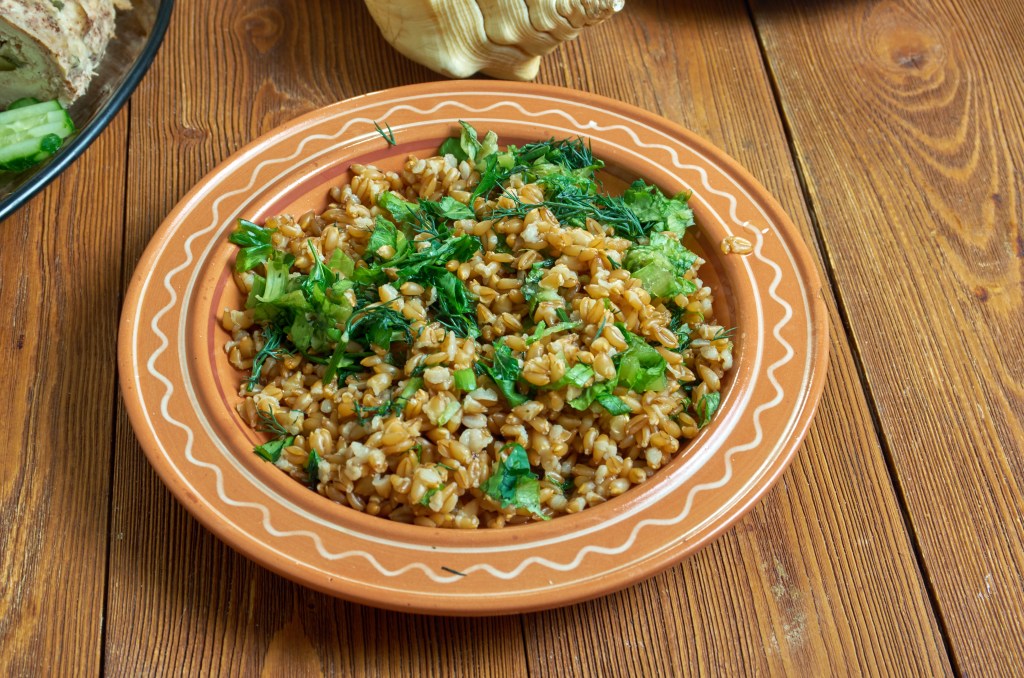
This cereal grain typically starts as young durum wheat, or “green wheat,” which is naturally processed, adding a different but versatile flavor profile.
Derived from the Arabic word “to rub,” the grain is roasted, then rubbed for a nutty, smoky flavor and chewy texture.
And this new addition to the grain train packs quite the nutritional punch, offering up a source of protein, fiber and manganese.
While not gluten-free, freekeh does beat out quinoa in two nutrient departments.
One cup of freekeh has 16 grams of fiber and 24 grams of protein, versus the 3 grams of fiber and 4 grams of protein in the same amount of quinoa.
Both fiber and protein can keep you feeling fuller for longer, and provide a bevy of other benefits.

Protein is the building block for muscles, supports immunity and regulates metabolism, while fiber helps digestion to keep everything running smoothly and stabilizes blood sugar.
Fiber in particular has been shown to increase regularity and improve stool consistency in those with constipation.
Fiber-rich foods like freekeh may also help ward off conditions like hemorrhoids and colorectal cancer.
The trendy nutrient has also been shown to help lower cholesterol levels and prevent plaque buildup in arteries, which can restrict blood flow and drastically increase the risk of a heart attack.
But too much fiber too soon — often in the form of “fibermaxxing” — can result in uncomfortable gastrointestinal symptoms like bloating, cramping, indigestion and gas.
The Dietary Guidelines for Americans recommends about 25 grams of fiber per day for women and 38 grams for men.
A diet full of protein-packed foods may also aid in weight loss by boosting metabolism and changing hormone levels that affect hunger.
A serving of the ancient grain also comes with plenty of heart-healthy vitamins and minerals like manganese, a micronutrient that may reduce inflammation and lower the risk of type 2 diabetes.
Containing several B vitamins, including thiamin (vitamin B1), riboflavin (vitamin B2) and niacin (vitamin B3), freekeh also supports nerve function, DNA repair, brain health and cognitive function, as deficiencies of these vitamins are linked to depression and memory loss.
A quarter-cup serving of freekeh provides about 13% of the daily recommended amount of magnesium, another important mineral for protection against heart disease.
Eating more whole grains has also been linked to reduced belly fat and body mass index, two indicators of overall health and disease risk.