After his girlfriend of two years cheated on him with an older man, Luis Pineda was left reeling.
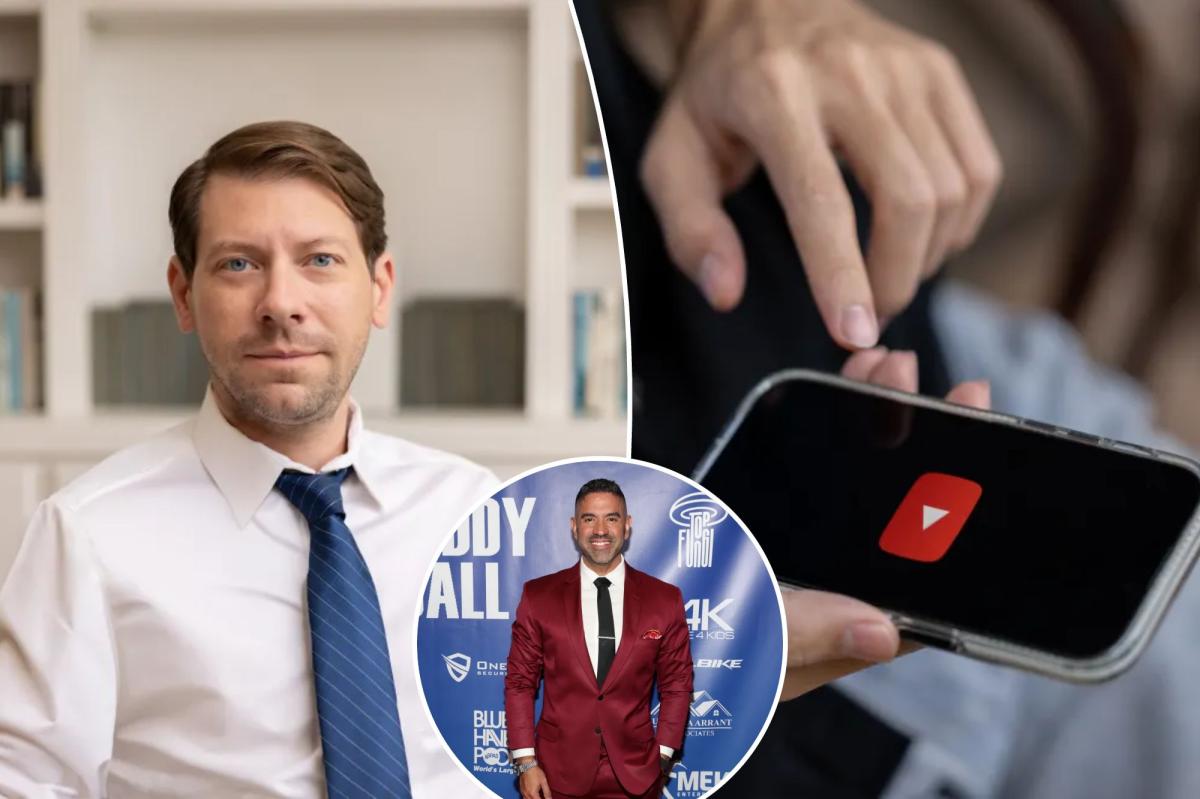
Heartbroken and confused, the 22-year-old’s quest to become a modern-day Casanova led him to Orion Taraban, a licensed dating psychologist with nearly 1 million YouTube subscribers and over 150 million views on his PsycHacks platform — who charges a whopping $1,200 for a 60-minute consultation.
Pineda didn’t have that kind of dough to shell out. But he did follow Taraban’s advice religiously on social media, which frames attraction as something men can improve through status, confidence, appearance, and wealth.
He told The Post it was life-changing.
“Do I just go sit in the corner and cry? Or do I build up my own lifestyle, build up myself to be a viable option in the mating pool?” Pineda said.
“I want to be competitive in this world, and I want to enjoy the optionality that would allow me to be less insecure than I was at the time after being cheated on.”
The advice he was getting from Taraban? That relationships are transactional, and shouldn’t be built solely on love and emotion. Videos include advice on combatting “How women win” and teaching men that sex is a powerful tool.
“I’m trying to tell the truth about dating and relationships without enraging men or alienating women,” Taraban told The Post.
Taraban justifies the hefty price he and his “dating expert” peers charge if they deliver “the value that the clients are looking for.”
Many of today’s desperate single men are going even further and shelling out as much as $10,000 to have their dating profiles audited for maximum impact, their attachment style dissected, and their behavior reframed to access their “high value” masculine energy by these so-called online dating “experts.”
A site called Digital Black Belt is one example. It calls itself “a community for busy, purpose-driven men who want a successful dating life without sacrificing their precious time achieving it.”
As part of the $300 a week package, users can get their social media profiles overhauled — making “hyper-realistic AI photos that actually look like you” — and provocative dating profiles written. The goal? To transform them into an alpha male that “women chase”.
One testimonial boasts, “Before, girls were the ones that would flake on me. But now, it’s like the opposite. I’m the one that flakes on them.”
It’s a lucrative business model with an unregulated landscape, especially because “dating” credentials are “nice to have,” but not a “need to have,” according to experts.
Amateur dating guru turned internet star, Michael Sartain, is one of the unofficial experts.
The former nightlife manager and United States Air Force Captain has managed to build a massive following of over 190,000 YouTube subscribers and 210,000 Instagram followers, thanks to his Men of Action program.
It costs upwards of $10,000, and is designed to help men “build social circles of incredible women and elite men in just 30 days.”
Sartain’s website is filled with pictures of him grinning alongside stunning scantily-clad women to entice potential prospects.
He advises men to prioritize fitness, financial success, and surrounding themselves with elite peers to excel in the dating market.
And his followers are enthralled. One thanks him for transforming him into an “international playboy nearly overnight.” Another says he was “4’11 and bald” but suddenly gained the confidence to be able to sleep with “beautiful women.”
Other popular figures include Owen Cook and Casey Zander, both with huge followings, who claim that “average men” can achieve the relationship of their dreams by enhancing their masculinity.
Cook often targets men with clickbait videos titled, “Average men can date baddies by simply doing this…” while Zander convinces men that “Women crave to see that you have the ability to leave them and walk away and not communicate…”
Erika De La Cruz saw the implications of this type of “red pill” adjacent online therapy play out in her own marriage.
What started as her estranged husband’s search for self-improvement evolved into what she described as an obsessive pursuit of “optimization” and “return on investment” in love and partnership.
He began messaging dating profile coaches, auditing his social media presence, and testing how different photos of himself would perform online.
“He went through a broker to buy this sunglasses account, take all the product off and put photos of himself on this account instead, to see how the photos would perform,” she told The Post.
And it’s not just men who are preaching this type of advice.
Sadia Khan has built a massive following of 730,000 followers on Instagram and has a client roster of high-net-worth men with disposable income and time. Her guidance, which she charges anywhere from $400 to well into the thousands for, focuses on gender dynamics in relationships.
Despite her mass appeal, critics find her messaging extremely problematic and misogynistic, with some calling her a “glorified tradwife,” ruining a generation of younger men with videos that push the belief that no lover deserves unconditional love and “the difference between a provider and a b—h.”
But Khan defends her content, arguing that women, too, are being influenced by highly polarized online messaging.
“There’s a rise in anti-men content online, and that’s really affecting women’s attitude towards men,” the coach told The Post. Khan frequently sees men who have tried to be “golden retriever” boyfriends or followed other TikTok advice and still fail, arguing that women lose respect for a man who is out of touch with his masculinity.
Sabrina Zohar, one of the internet’s fastest-growing dating personalities, understands the appeal of these dating gurus — to a certain extent.
She points out that, unlike traditional therapy, which requires a long-term commitment, online advice is immediate and actionable. A dating profile can be optimized. A text can be rewritten. An attachment style can be identified.
That desire for immediacy has allowed creators to build loyal audiences through emotionally charged, highly shareable content.
“We have to remember that people are desperate and they’re craving connection,” Zohar pointed out. “But they’re terrified of rejection, so they will pay any price to avoid that.”
“A lot of these coaches, they’re preying on your insecurities. They’re preying on your vulnerabilities,” Zohar told The Post.