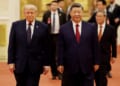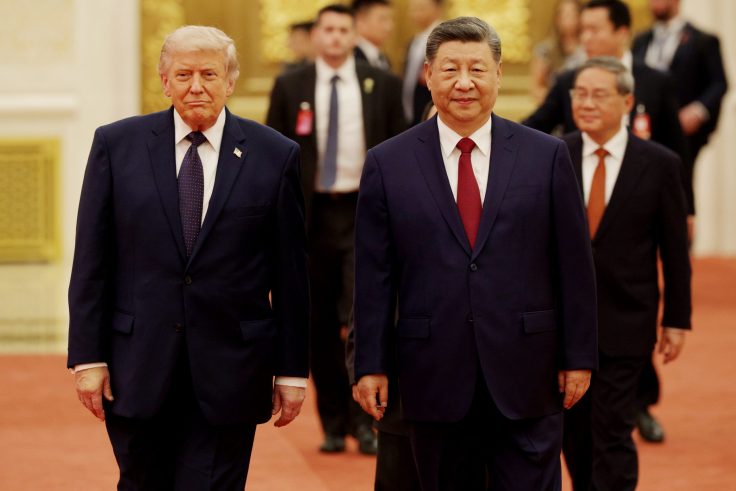
This week’s Beijing summit had all the necessary ingredients for an epic geopolitical confrontation. Donald Trump and Xi Jinping, the central figures in the rivalry reshaping global politics, squared off for the first time since their showdown in Busan.
Instead, it resembled a garden party more than a UFC prize fight. The pair exchanged toasts, visited monuments and historic sites together, and talked vaguely about strategic stability and even friendship between their countries. A closer inspection reveals the daggers behind their smiles. The contest between the United States and China continues unabated.
Conventional wisdom held that Trump arrived in Beijing in a position of weakness. The Iran campaign has turned into a quagmire, the story goes, and Trump is eager to avoid a confrontation. Xi, on the other hand, has carefully prepared his country for being cut off from Middle Eastern oil, and his foresight makes him stronger at home and abroad.
Xi Jinping made his priorities clear from the start. He proposed, and Trump accepted, framing the Sino-American relationship around “constructive strategic stability” for the “next three years and beyond.” That supposedly means that the United States and China will moderate their competition and manage their differences peacefully.
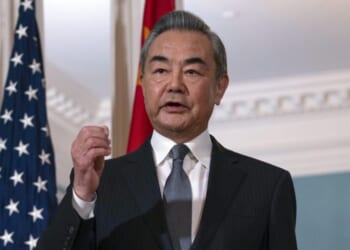
The rest of Xi’s agenda revealed that “stability” for him means constraining American reactions to Chinese aggression. He “stressed” that “the Taiwan question is the most important issue in China-U.S. relations,” and if mishandled, “the two countries will have clashes and even conflicts.” He also warned Trump not to fall into the so-called Thucydides trap, in which a declining power starts a conflict with a rising one. In Beijing’s view, China is rising and the Americans would be prudent to step aside.
Trump brushed off Xi’s veiled threats. Secretary of State Marco Rubio pointed out that the Chinese “always raise [Taiwan] on their side, we always make clear our position, and we move on.” U.S. policy “is unchanged.” Trump acknowledged that “I heard him out” but “made no commitment either way.”
Trump wants the United States not only to be the preeminent global power but also to be seen that way, and some developments this week strengthened his hand. During the Beijing meetings, CIA director John Ratcliffe flew to Havana with a stark message for China’s best remaining friends in the Western Hemisphere: They have very little time to, among other things, close the Chinese and Russian intelligence posts they host. He reportedly reminded them of Nicolás Maduro’s capture as rumors swirl that the Justice Department is preparing an indictment for Raúl Castro. The two left-wing dictators might end up bunkmates in Brooklyn’s detention center.
The Iran situation is growing more complicated too. News leaked this week that Saudi Arabia and the United Arab Emirates both bombed Iran in April, and Kuwait captured several Iranian infiltrators in early May, so America’s regional allies are taking a more active role in countering Iran than many realized. There is still a serious transatlantic rift, but German chancellor Friedrich Merz indicated he and Trump are mending fences.
It is not working out well for Xi. The White House’s statement that Xi “made clear China’s opposition to the militarization of the Strait [of Hormuz] and any effort to charge a toll for its use” and agreed “that Iran can never have a nuclear weapon” left the Iranians sputtering about betrayal. China’s highly touted green energy boom is not protecting its economy from the impact of higher oil and gas prices, and there are few alternatives. Xi is evidently interested in buying American oil, which does not reduce China’s vulnerability to American pressure.
The next steps will reveal who has achieved the most at the summit. Xi wants Trump to cancel arms sales to Taiwan, which would weaken the island democracy significantly—especially since doves in the Taiwanese parliament slashed Taiwan’s domestic defense production last week. Trump asked Xi to release pastor Ezra Jin and Hong Kong media mogul Jimmy Lai, and a success there would please Trump’s evangelical and Catholic supporters.
The economic ceasefire from Busan will continue for now. Trump seems to be gambling that American tech companies can stay ahead of China’s state champions as long as he keeps regulatory obstacles out of the way. He is offering some access to Nvidia’s high-end H200 AI chips, even though China is not buying. Meanwhile, American officials such as the Pentagon’s “Deal Team Six” are building out new supply chains for rare earths and other critical components that China currently dominates.
A moment at the opening banquet best captured the summit and its meaning. Xi and Trump each offered toasts, then carefully returned their glasses to waiters from their home country. When the other side can get your fingerprints or DNA, after all, you can’t be too careful.