The US Agency for International Development’s inspector general’s office has already identified UN employees who are linked to the terror group
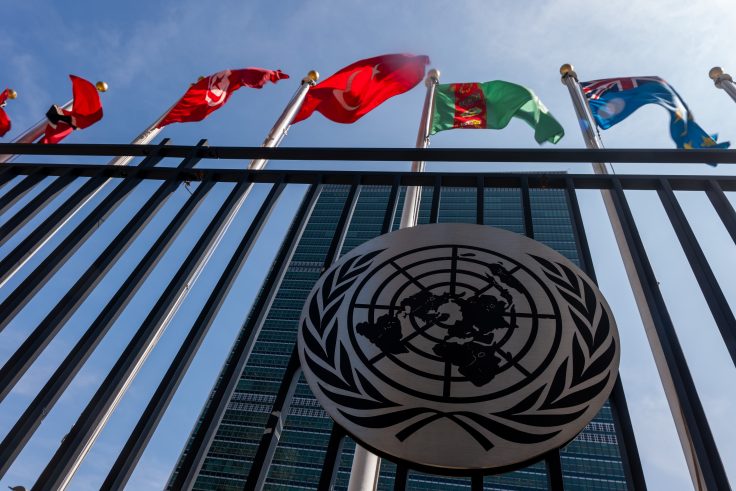
The chief oversight body responsible for tracking U.S. foreign assistance says United Nations agencies are stonewalling a probe into their ties to Hamas. The agencies have failed to provide investigators with information that could identify their employees as affiliates of the terror group, according to a non-public report transmitted to Congress and obtained by the Washington Free Beacon.
The U.S. Agency for International Development (USAID) inspector general’s office, an investigative entity separate from USAID, sent letters to six separate U.N. agencies in December 2025 asking them to name all employees “who worked on U.S.-government funded awards” and provide their contact information and “date and place of birth.” The office also asked the agencies to detail their “interactions with Hamas,” among other requests.
One recipient, the World Food Programme, confirmed receipt of the letter but did not send a final response, while the U.N. Development Programme did not respond at all, according to the report. Four others—the U.N. Office for the Coordination of Humanitarian Affairs, the United Nations Children’s Fund, the International Organization for Migration, and the World Health Organization—offered “partial responses,” the report said. “None of the responding UN recipients provided the requested information pertaining to their personnel,” it added.
The investigation—dubbed “Operation Stop the Carousel”—comes amid concerns from the State Department and from Republicans in Congress that U.N. agencies working in Gaza remain vulnerable to Hamas infiltration. The inspector general initiated the investigation late last year in an attempt to prevent Hamas-linked U.N. staffers from working on U.S.-funded projects. Its March 31 report, sent to Congress on Wednesday, is the latest update on that investigation.
Access to employment records would enable the inspector general to determine whether the U.S. government had ever flagged a particular U.N. staffer for involvement with Hamas or another terrorist organization. Staffers who were found to have Hamas affiliations could then be blacklisted, preventing them from working on any U.S.-funded foreign aid project for a period of 10 years. The U.S. government blacklisted one former U.N. Relief and Works Agency (UNRWA) school principal who participated in the Oct. 7 attack, the Free Beacon reported in February. The inspector general is “in the process of referring numerous additional UNRWA-affiliated personnel for suspension or debarment consideration in the near future,” according to the report.
A spokesman for the U.N. Office for the Coordination of Humanitarian Affairs, which the inspector general said gave only a “partial” response to its query, told the Free Beacon that the agency “maintain[s] a strong and constructive relationship with the USAID Office of Inspector General” and that the body has responded to requests for information. The International Organization for Migration—which also gave a “partial” response, according to the investigators’ report—said it “works and communicates regularly with all our donors, including the U.S. Government, fully responding to all inquiries with timely replies.”
The U.N. Development Programme—which did not respond to the inspector general’s requests, according to the report—told the Free Beacon it never received an inquiry from investigators. None of the other U.N. bodies responded to requests for comment. A USAID Office of Inspector General spokesman declined to comment on the ongoing investigation.
USAID was responsible for doling out the United States’ contributions to the U.N.’s humanitarian bodies before President Donald Trump dismantled the agency in 2025. In February 2025, a former senior USAID official, Max Primorac, told Congress that, under the Biden administration, the agency scrapped vetting reforms from Trump’s first term meant to prevent taxpayer funds from ending up in the hands of foreign terror organizations. Primorac said, “vast sums of U.S. money have been diverted to fund terrorists in Gaza, Syria, Yemen, and Afghanistan.”
The inspector general’s report lays out shortcomings in USAID’s past vetting standards, particularly with respect to the U.N.
“USAID policies exempted UN organizations from the vetting process that the Agency required of NGOs and contractors,” the report states. “As a result, the U.S. government has relied on the UN to vet its own staff responsible for performing U.S. taxpayer-funded activities and programs on the ground.”
“OIG has consistently raised concerns about UN cooperation, transparency, and willingness to provide information to investigators who request UN records pertinent to U.S.-funded awards,” it continues.
The U.N. agencies that responded to the inspector general’s letter argued that their own internal vetting procedures, as well as those housed within the U.N. system, were used to screen staffers for ties to Hamas and other armed militant groups. The inspector general determined that those procedures have “vulnerabilities that limit the assurance that terrorist-affiliated staff have not been onboarded.”
The U.N. sanctions list, for instance, includes just “730 individuals and 272 entities,” far fewer than those sanctioned globally by the U.S. government. Hamas, which had multiple members identified as UNRWA employees, is not on the U.N.’s list of terrorist organizations.