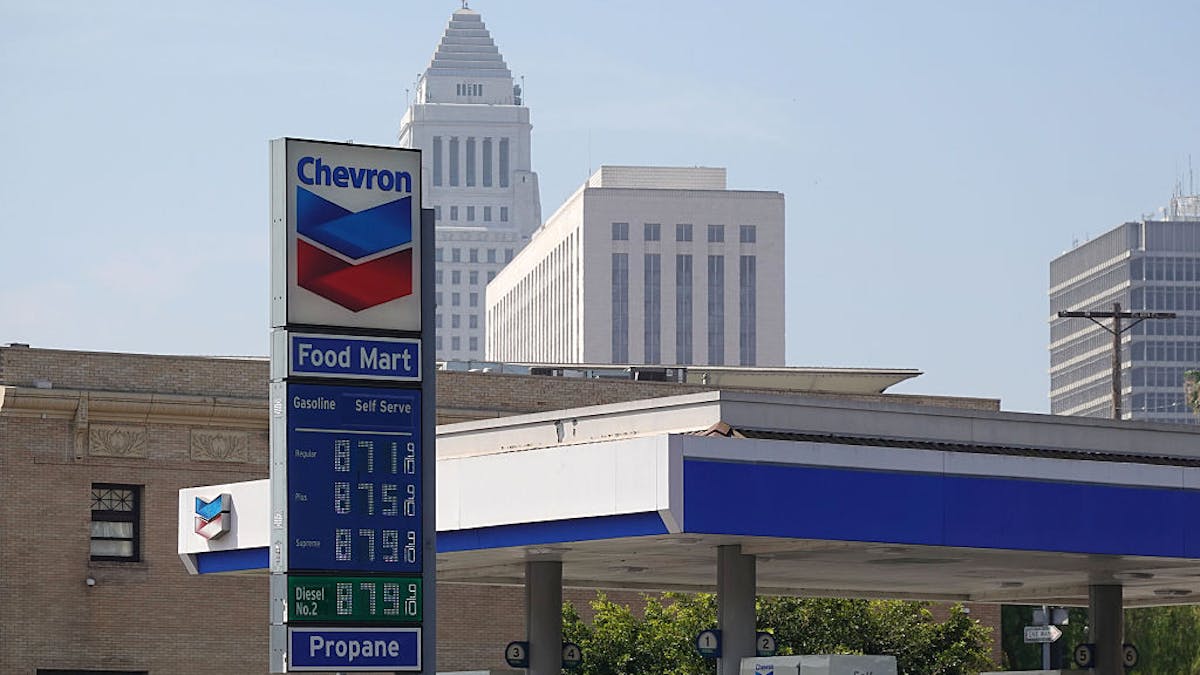
Recent media coverage of rising gas prices reflects something more consequential than concern for energy affordability. It reveals a pattern of selective outrage and one meant to condition the American public to view any temporary cost associated with national security as politically unacceptable — especially under a Republican administration. This dynamic carries strategic consequences. It erodes trust, weakens institutional resilience, and reduces our country’s capacity to absorb short-term strain in pursuit of long-term stability.
During the Biden administration, gasoline prices reached historic and unsustainable levels, surpassing $5.00 per gallon in many parts of the country as Russia’s invasion of Ukraine disrupted global energy markets. The media’s coverage at the time was extensive, but they refused to blame then-President Biden for foolishly tapping into the Strategic Petroleum Reserve (SPR) in November 2021 ahead of the war. The dominant narrative emphasized structural forces, including global commodity markets, supply chain disruptions, and post-pandemic demand recovery outpacing supply. It was the former president’s climate policies, however, that inevitably invited energy insecurity.
Those explanations reflected the realities of energy economics. Energy markets respond to geopolitical shocks, and price volatility often follows disruptions to supply and transportation infrastructure. Public messaging from legacy media during that period emphasized patience while markets stabilized.
Current coverage reflects a very different emphasis: It’s panicked, grim, and chaotic. The narrative is intended to guilt developed nations into abandoning “warmongering” oil and gas for “peaceful” renewable energy to fight a so-called climate crisis, despite much of the world now prioritizing energy security. The United Nations claims wind and solar energy, unlike oil and gas, will withstand closures in the Strait of Hormuz. Much to the UN’s chagrin, energy-importing nations that have adopted 100% renewable energy targets are planning to purchase American liquified natural gas (LNG) or pivot back to coal after Qatar’s LNG terminal closed down.
Price volatility is frequently presented as evidence of policy failure rather than as a predictable consequence of geopolitical risk. Rather than putting the temporary economic pressure as something that deserves perspective and patience, it is portrayed as a political liability that must be eliminated immediately. This framing amplifies anxiety while obscuring the strategic rationale behind national security decisions and the long-term expectation that energy prices will soon come back down. This isn’t 2022, with an administration that deliberately suppressed domestic energy production. The landscape is vastly different, and arguably more secure, with American energy dominance keeping prices relatively low here at home and coming to the rescue abroad.
That shift in emphasis by the media shapes public perception over time.
Research on public opinion during military operations demonstrates public support for national security decisions tracks the signals sent by major institutions.
Coverage that focuses primarily on risk, cost, and disruption encourages the public to conclude that action lacks justification. A sustained emphasis on negative consequences and downplaying the purpose and potential upsides contributes to declining confidence in leadership and reduced tolerance for continued engagement.
Over the long term, the media framing weakens our country and the public. A society that interprets every economic disruption as a disaster and evidence of fundamental failure becomes less willing to endure temporary hardship even when the alternative carries greater long-term risk and expense.
Trust declines gradually through accumulated inconsistency.
This erosion of trust carries implications beyond the current moment. A public conditioned to associate short-term economic disruption with failure will resist future decisions that require temporary sacrifice, regardless of the strategic stakes involved.
Public uncertainty about the necessity of current operations reflects an imbalance in how the rationale has been reinforced in public discourse. Policymakers have articulated the objective of degrading the capabilities of a regime that was developing advanced ballistic missile capabilities able to reach long distances, unfettered nuclear ambitions, arms proxy forces across multiple theaters, and uses instability to influence global energy markets.
The strategic logic rests on deterrence. Restoring deterrence imposes short-term costs but reduces the likelihood of sustained instability and higher long-term economic disruption – specifically global energy prices.
Coverage that concentrates on immediate economic consequences without sustained attention to strategic necessity leaves the public with incomplete information. That informational gap encourages apprehension and weakens support for popular actions that serve long-term security interests.
The United States has historically maintained security and prosperity by accepting temporary hardship when the stakes were explained clearly and consistently. Wartime rationing, economic sanctions, and military mobilization all required short-term sacrifice in service of larger objectives.
Public resilience depends on coherent communication from institutions and a shared understanding of the relationship between cost and purpose. That resilience weakens when the information environment frames disruption as avoidable and treats temporary hardship as evidence of failure.
Leadership requires the willingness to act despite short-term discomfort and to explain the reasons for that action clearly. Public resilience requires the willingness to endure temporary strain when the strategic rationale is understood.
Americans facing higher gas prices deserve transparency for what they are being asked to pay and the strategic purpose behind this ask from the media without bias. Clear explanation strengthens trust, supports resilience, and preserves the capacity to act decisively when national security requires it.
* * *
Meaghan Mobbs is director of Independent Women’s Center for American Safety and Security.
Gabriella Hoffman is director of Independent Women’s Center for Energy and Conservation.