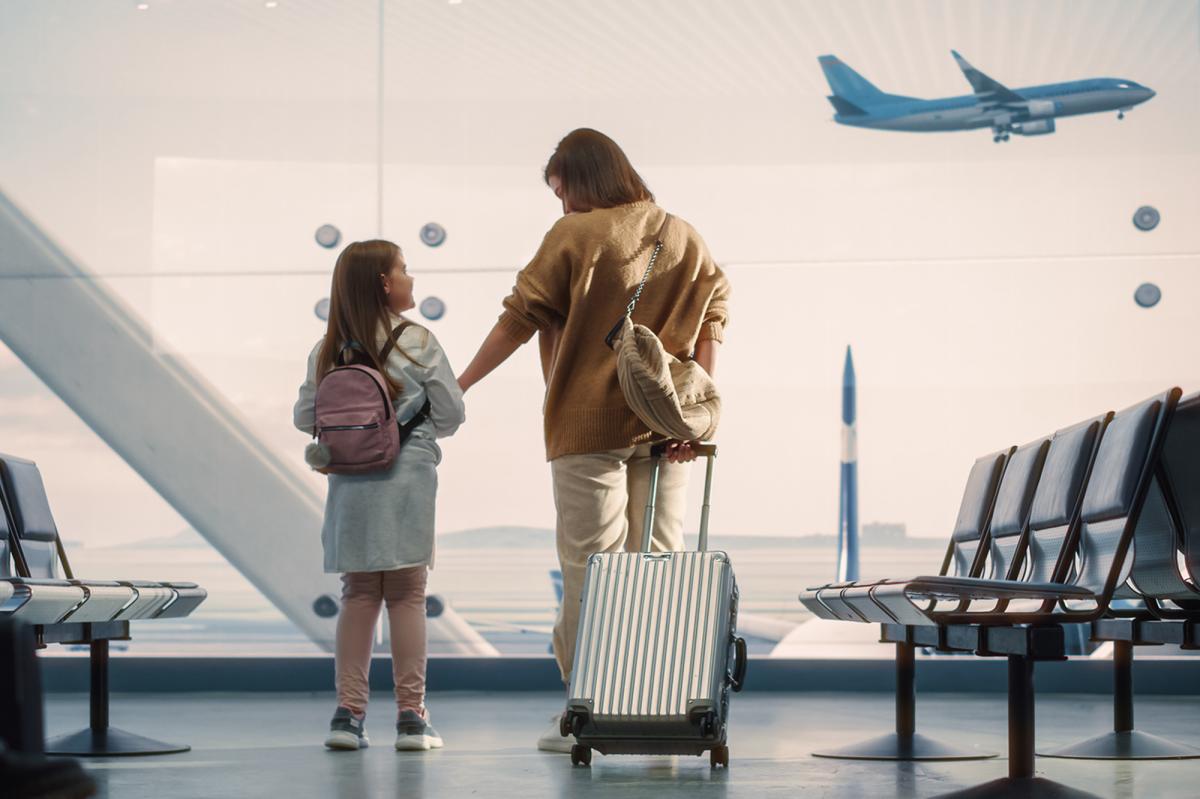
Traveling with kids is downright stressful for parents, but young ones who experience flight anxiety can add another layer of dread for mom and dad — not to mention other passengers.
Travel anxiety and fear of flying are very common in children, Dr. Katie Hurley, vice president of community initiatives at The Jed Foundation (JED), explained to The Post.
“While some kids may feel excited — especially if they’re heading somewhere they’ve been looking forward to — travel can be overwhelming, exhausting, and even overstimulating for others,” she said.
Traveling disrupts a child’s normal routine, which can make them feel unsettled, and airports and airplanes bring unfamiliar, sometimes extreme reactions.
Between long waits, crowded terminals, loud jet engines, and all the unpredictability, children could experience heightened levels of stress or irritability. With extra-long TSA wait times due to the current government shutdown, there’s also more time for anxiety to build up — and then release itself in a thundering tantrum.
When a child is scared to fly, their cortisol levels rise, which can make them “nervous, moody, overreactive — and yes, occasionally a bit dramatic,” Sara Chana Silverstein, who specializes in holistic pediatric wellness, told The Post.
“No judgment — we’ve all been there at 30,000 feet,” she quipped.
“By recognizing that these reactions are rooted in discomfort or anxiety — not misbehavior — parents can better support their children and create a more manageable, reassuring travel experience,” Hurley added.
Younger children, especially, might not have the words to express that they’re scared. Instead, the fear of flying can manifest in other behaviors such as irritation, excessive crying, or being quieter than usual.
There could also be physical symptoms such as a racing heart, shortness of breath or stomachaches. It could appear as though a child is acting out and throwing a “tantrum” — but in reality, they’re just scared or anxious.
“These reactions are not simply misbehavior, but signals that a child is feeling overwhelmed or uncertain,” Hurley said.
Silverstein added that for children under 5, especially, “tantrums are normal — they’re not plotting against you; their brains are just still under construction.”
For children who have never been on a plane before, the fear can be even more intense due to the unfamiliar sounds, sensations and overall environment. In those situations, Hurley told The Post, it’s vital that parents recognize and validate their child’s feelings, even if it’s not outright expressed with words.
“Offering reassurance, maintaining routines where possible, and approaching the experience with patience can make a significant difference in helping children feel more secure,” said Hurley, author of the forthcoming book “Breaking the Boy Code: The New Playbook for Raising Resilient Boys.”
One way to help reduce anxiety in advance is to explain what’s about to happen, whether by walking them through it or using a visual asset. Hurley noted that it’s important to meet children where they are in their development, answering questions in age-appropriate language.
Parents can also tell their kids each step that will be taken from the moment of leaving home to getting on the plane, Silverstein said. Since children love to play, it can be beneficial to set up an “airport” at home before a trip and take the child’s dolls or stuffed animals on a “trip.”
For younger kids, Sesame Workshop provides resources that can help kids work through fear that parents can download ahead of time. Reading picture books about travel and pointing out small details can help kids feel confident. For older children, parents can go over the plan and provide them with practical knowledge, like safety instructions, what to do in an emergency, or where to go if they become separated at the airport.
“Kids feel calmer when they know what to expect,” Silverstein explained.
Practicing breathing techniques in advance, “preferably before anyone feels upset,” can help kids learn how to slow down in moments of high stress. Square breathing — inhale for a count of four, hold for four, exhale for four, hold for four, while tracing a square in the palm of your hand — is one method, said Hurley.
For young kids, “teddy bear breathing” or “belly breathing” could work. Have them lie down and place a stuffed animal on their belly, inhale slowly through the nose to try to get the stuffed animal to go as high as they can on their stomach, then slowly exhale to bring it back down.
Putting together an “anxiety toolkit” tailored specifically to your child can be helpful throughout the whole trip, Hurley added. The idea is to fill it with things that appeal to all five senses, and it can include anything comfortable or familiar:
- Touch: Items like a stress ball, small stuffed animal or weighted stuffed animal, fidget spinner, silly putty or something cold
- See: A small book, a mini coloring book, photos, a toy kaleidoscope, or play a game of “I Spy”
- Smell: Essential oils, fruit, car freshener
- Hear: A playlist of songs, an audiobook, a podcast, a guided meditation
- Taste: Sour candies, peppermint gum, crunchy snacks, mints, snacks with positive memories
When Silverstein travels with her kids, her simple, secret weapon is diversionary “love notes,” on which she writes to each child about how special they are, using colored paper that she cuts into fun shapes.
“Distractions are not just a good idea — they’re a lifesaver,” she advised.
For older kids, parents can encourage them to make a checklist of things they may want in their backpacks that will help them stay comfortable throughout travel.
While at the airport, Silverstein recommends pointing out all the other children who are there to promote the normalcy of air travel.
“Notice their backpacks, their excitement, their smiles. Help your child see that flying is something kids all over the world do every single day.”
During a flight, turbulence can feel unsettling for children and adults alike, so parents should acknowledge their feelings, rather than dismiss them, letting them know that turbulence is a typical part of flying, Hurley said.
It may sound simple, but Silverstein stressed making sure the child has eaten a solid, nourishing meal and is well hydrated before traveling. In her book, “Moodtopia for Kids: Nurturing Emotional Wellness with Nature’s Remedies,” she explained how even mild dehydration can lead to emotional dysregulation.
“Together, these strategies help children feel heard, supported, and better equipped to handle the challenges of travel,” she said.
While it can be uncomfortable to witness one’s child in distress, it’s vital for parents to remain calm, Hurley warned. Children take cues from their body language and tone, so being in a regulated state can help kids feel safe.
Silverstein added that in her experience, very young children often aren’t as scared of flying as their parents and caregivers — and kids can see right through that, igniting their anxiety.
“Kids are excellent emotional detectives,” she said.